
Understanding Your Nervous System: The Foundation of Physical and Emotional Health
Have you ever wondered why you sometimes react before you’ve had time to think? Why your shoulders tense when you’re under pressure, your heart races before an important meeting, or you feel exhausted even after a good night’s sleep?
Perhaps you’ve noticed that periods of stress are often accompanied by headaches, digestive problems, muscle pain or increased anxiety. Or maybe you’ve found yourself repeatedly falling into the same emotional patterns, despite your best intentions to change.
Although these experiences may seem unrelated, they all have one thing in common: your nervous system.
Your nervous system is far more than a network of nerves carrying messages around your body. It is the master communication system that constantly monitors your internal and external environment, deciding – often without your conscious awareness – how your body should respond. It influences your thoughts, emotions, breathing, heart rate, digestion, immune system, movement, sleep, hormone production and even your experience of pain.
In many ways, it acts like the conductor of an orchestra. Every organ, muscle and body system has its own role to play, but it is the nervous system that coordinates them into a harmonious whole. When the conductor is calm and responsive, the orchestra performs beautifully. When the conductor becomes overwhelmed or disorganised, every section begins to suffer.
This is why caring for your nervous system isn’t simply about reducing stress. It’s about creating the conditions in which your entire body can function more effectively.
The Nervous System Is Always Working Behind the Scenes
One of the most fascinating aspects of the nervous system is that the vast majority of its work happens automatically.
You don’t consciously decide to increase your heart rate when you’re frightened. You don’t have to remember to digest your lunch, adjust your blood pressure when you stand up, or coordinate the thousands of tiny muscle contractions involved in taking each breath. These processes are managed continuously by your autonomic nervous system, allowing you to focus on living your life rather than controlling every bodily function.
In fact, your brain processes an astonishing amount of information every second. Only a tiny fraction ever reaches your conscious awareness. Instead, your nervous system is constantly asking questions such as:
- Am I safe?
- Is there a threat?
- Do I need to conserve energy?
- Is it safe to connect with others?
- Should I prepare to fight, flee or relax?
These questions are answered incredibly quickly, based on a combination of your current environment, your previous experiences and the signals arriving from your body.
This means that your nervous system is continually making predictions about what is happening and what might happen next. Its primary goal is not happiness or productivity – it is survival.
Fortunately, most of the time these predictions are remarkably accurate. However, when the nervous system has been shaped by chronic stress, trauma, illness or persistent pain, it can begin to perceive danger where none exists. As a result, the body may remain in a state of protection long after the original threat has disappeared.
Why Modern Life Challenges the Nervous System
Our nervous systems evolved over hundreds of thousands of years in environments very different from the ones we inhabit today.
For our ancestors, danger was usually immediate and short-lived. A predator appeared. The body prepared for action. Once the threat had passed, there was time to recover, rest and return to normal.
Modern stress looks very different.
Instead of occasional life-threatening events, many people experience a relentless stream of low-level stressors:
- constant notifications and emails
- financial pressures
- demanding jobs
- caring responsibilities
- poor sleep
- traffic
- information overload
- social media comparisons
- uncertainty about the future
- chronic health conditions
- ongoing pain
Individually, these challenges may seem manageable. Together, however, they can keep the nervous system in a prolonged state of alertness.
The difficulty is that your nervous system doesn’t always distinguish between a charging tiger and an overflowing inbox. Both can trigger similar physiological responses if your brain interprets them as significant threats.
This doesn’t mean your body is malfunctioning. Quite the opposite.
It means your nervous system is doing exactly what it was designed to do: protect you.
The problem arises when this protective response becomes the body’s new normal.
When Protection Becomes the Problem
Stress itself isn’t harmful.
In fact, healthy stress is essential. It motivates us to act, helps us learn new skills, improves physical performance and enables us to respond effectively during emergencies.
Problems develop when the body struggles to switch off that protective response.
Imagine driving a car with one foot on the accelerator all day long. Eventually, the engine begins to overheat.
The same principle applies to the human body.
When stress hormones remain elevated for prolonged periods, muscles may stay tense, breathing often becomes shallower, sleep quality declines, digestion slows, inflammation may increase and recovery becomes more difficult.
Over time, this persistent state of physiological vigilance can contribute to a wide range of symptoms, including:
- chronic muscle tension
- neck and back pain
- jaw clenching
- headaches
- digestive disturbances
- fatigue
- anxiety
- poor concentration
- disrupted sleep
- heightened sensitivity to pain
Importantly, this does not mean these symptoms are “all in your head.”
They are very real physical experiences, produced by genuine changes within the nervous system and the body’s protective mechanisms.
Understanding this can be incredibly empowering.
Rather than seeing your body as broken or working against you, you can begin to recognise that it is trying – sometimes a little too enthusiastically – to keep you safe.
Your Body Is Listening All the Time
Many people think of the brain as issuing commands to the rest of the body.
In reality, communication flows in both directions.
Every second, your muscles, joints, skin, heart, lungs and digestive system are sending vast amounts of information back to the brain. These incoming signals help shape how safe – or unsafe – your nervous system believes you are.
This means that seemingly simple activities can have profound effects on how you feel.
Gentle movement can reassure the brain that your body is capable and resilient.
Slow, relaxed breathing can signal that the immediate danger has passed.
Supportive social interaction can communicate safety and belonging.
Time spent in nature may reduce the brain’s perception of threat.
Even changing your posture or softening the muscles around your eyes and jaw can subtly influence your nervous system.
In other words, your body is not simply responding to your brain.
Your body is also constantly teaching your brain how to interpret the world.
This two-way conversation lies at the heart of nervous system regulation and helps explain why physical approaches – such as breathing exercises, movement, yoga and other body-based therapies – can have such a powerful influence on emotional wellbeing as well as physical health.
A New Way of Thinking About Health
For many years, healthcare often focused on treating individual symptoms in isolation.
Back pain belonged to the muscles.
Anxiety belonged to the mind.
Digestive problems belonged to the gut.
Fatigue belonged to… somewhere else entirely.
We now understand that the body is far more interconnected than that.
The nervous system links every one of these experiences together.
This doesn’t mean the nervous system is responsible for every illness or that all health problems originate from stress. Genetics, infection, injury, nutrition, lifestyle and many other factors all play important roles.
However, the state of your nervous system profoundly influences how your body responds to these challenges.
A well-regulated nervous system supports healing, recovery, adaptability and resilience.
An overwhelmed nervous system can make even relatively small challenges feel overwhelming.
Learning to care for your nervous system is therefore not about achieving a permanent state of calm or eliminating stress altogether. That isn’t realistic, nor is it desirable.
Instead, it’s about developing flexibility.
It’s about helping your body move smoothly between periods of activity and periods of rest, between challenge and recovery, between effort and restoration.
This ability to adapt—to become activated when necessary and then return to a state of balance afterwards – is one of the defining characteristics of a healthy nervous system.
And the wonderful news is that, throughout our lives, the nervous system remains capable of learning, adapting and changing.
This remarkable ability is known as neuroplasticity – and it offers hope to anyone who has ever felt trapped by stress, chronic pain or long-standing patterns of physical or emotional tension.
In the next section, we’ll explore exactly how the nervous system responds to stress, why those responses are so powerful, and what happens when they become stuck in survival mode.
Understanding Your Autonomic Nervous System
To understand why we react the way we do, it helps to become familiar with one of the most important parts of the nervous system: the autonomic nervous system.
As its name suggests, the autonomic nervous system controls the functions that happen automatically, without conscious thought. It regulates your heart rate, blood pressure, breathing, digestion, body temperature, pupil size, hormone release and countless other processes that keep you alive every moment of every day.
Rather than simply switching between “on” and “off,” the autonomic nervous system is constantly adjusting your body’s activity according to what it believes you need in any given moment.
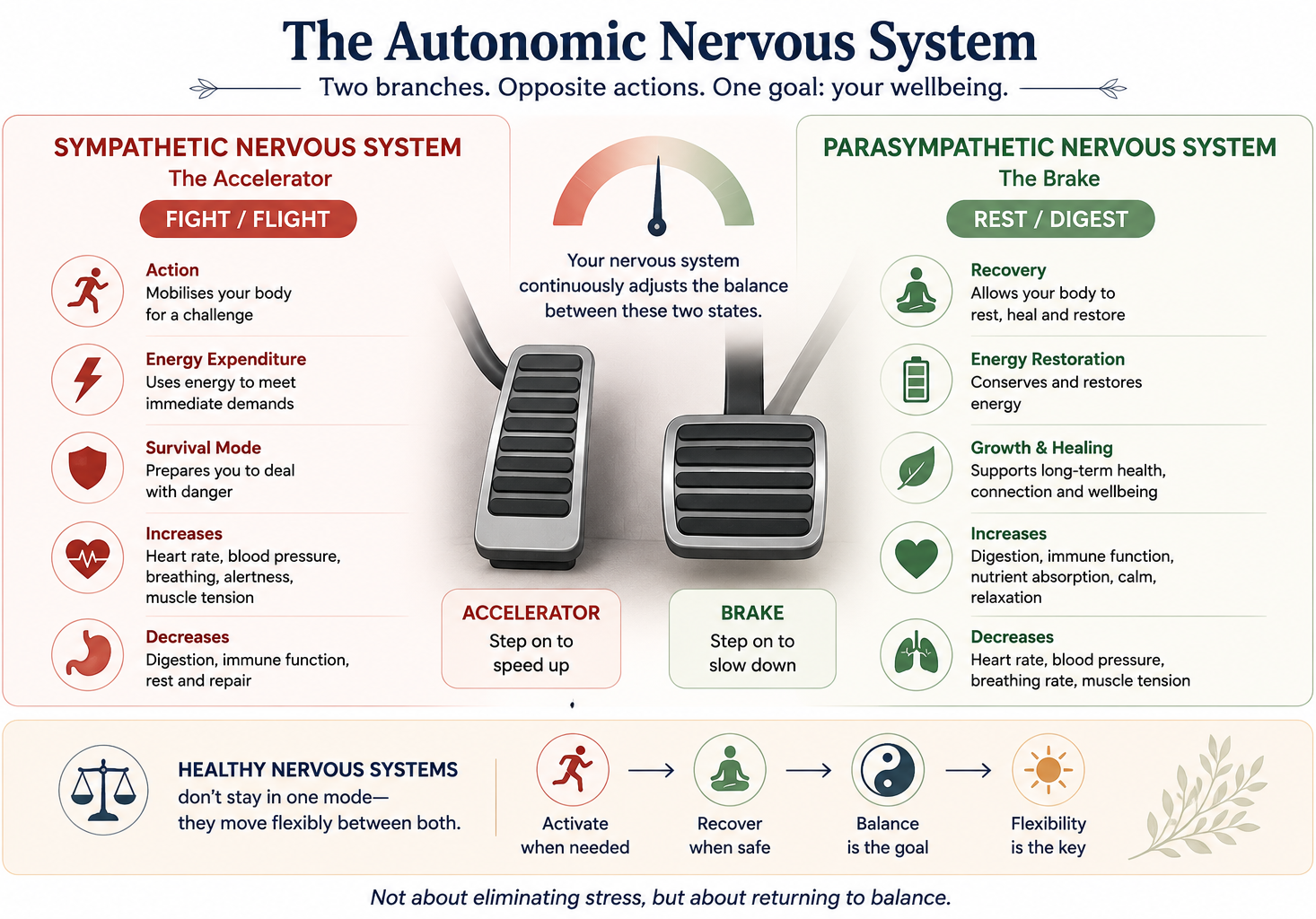
Broadly speaking, it has two main branches that work together like the accelerator and the brake in a car.
The Sympathetic Nervous System: Preparing You for Action
The sympathetic nervous system is responsible for mobilising your body’s resources when action is required.
When your brain detects a potential threat – whether that’s stepping into the path of a speeding car or giving an important presentation – it rapidly prepares your body to respond.
Your heart beats faster.
Your breathing becomes quicker.
Blood flow is redirected towards your muscles.
Your pupils widen to improve vision.
Stored glucose is released to provide energy.
Your senses become sharper and your reaction time improves.
At the same time, functions that aren’t immediately essential for survival, such as digestion and reproduction, temporarily take a back seat.
This response is often called the fight-or-flight response, although in reality it is much more sophisticated than those two words suggest.
Without it, our ancestors would not have survived, and neither would we.
The sympathetic nervous system is not the enemy. It allows us to exercise, solve problems, meet deadlines, compete in sport, protect ourselves from danger and rise to life’s challenges.
The goal isn’t to eliminate sympathetic activation.
The goal is to be able to switch it off again when the challenge has passed.
The Parasympathetic Nervous System: Rest, Recover and Repair
Once the danger has passed, the parasympathetic nervous system helps restore balance.
Heart rate slows.
Breathing becomes deeper and more relaxed.
Digestion resumes.
Muscles begin to soften.
The immune system can devote more energy to repair and healing.
Hormones return towards their normal levels.
The body shifts away from survival mode and towards restoration.
This is sometimes described as the rest-and-digest state, although that phrase only captures part of its role.
It is also the state in which we heal, learn, grow, connect with others, create, digest food efficiently and consolidate memories. Many of the body’s maintenance and repair processes are most active when the parasympathetic nervous system is dominant.
In reality, both branches of the autonomic nervous system are active all the time, continuously adjusting their balance according to your circumstances.
Good health depends not on one branch dominating the other, but on their ability to work together flexibly.
The Role of the Vagus Nerve
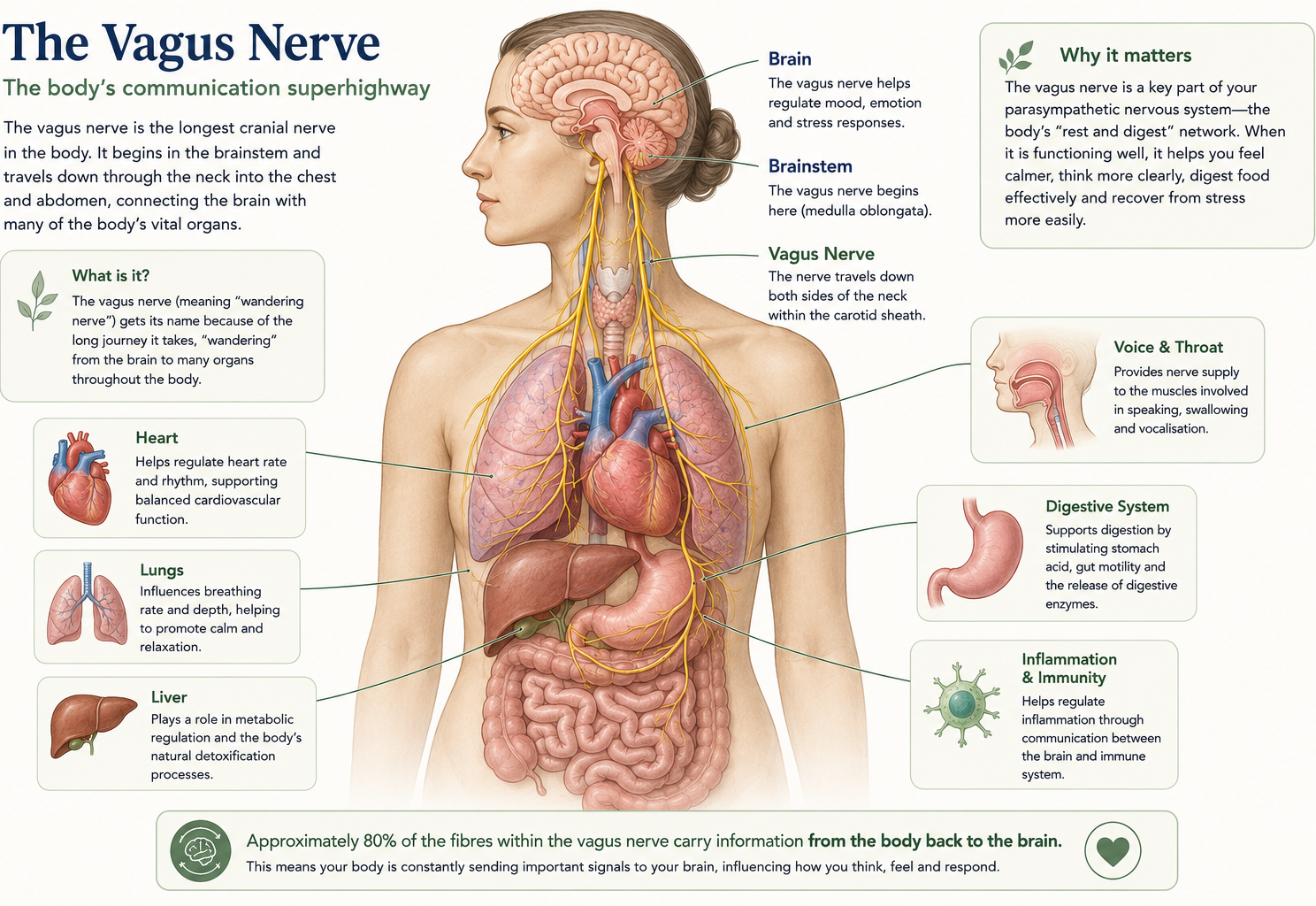
One of the most fascinating structures involved in nervous system regulation is the vagus nerve.
The vagus nerve is the longest cranial nerve in the body, extending from the brainstem through the neck and into the chest and abdomen. Along its journey, it communicates with the heart, lungs, digestive system and many other organs.
In many ways, it acts as a communication superhighway between the brain and the rest of the body.
Interestingly, most of the information travelling along the vagus nerve isn’t going from the brain to the body.
It’s travelling in the opposite direction.
Your heart, lungs and digestive system are constantly sending information back to the brain about what is happening inside your body. Your brain then uses this information to adjust its responses accordingly.
This is one reason why slow breathing, humming, singing, gentle movement, meditation and other body-based practices can influence emotional wellbeing. They aren’t simply “relaxation techniques” – they provide your brain with sensory information that suggests your body is safe.
Over time, regularly engaging in these practices may improve what’s known as vagal tone, a measure of how effectively the vagus nerve helps regulate the body’s responses to stress.
Higher vagal tone has been associated with greater emotional resilience, better cardiovascular health, improved stress recovery and healthier regulation of inflammation.
It’s More Than Fight or Flight
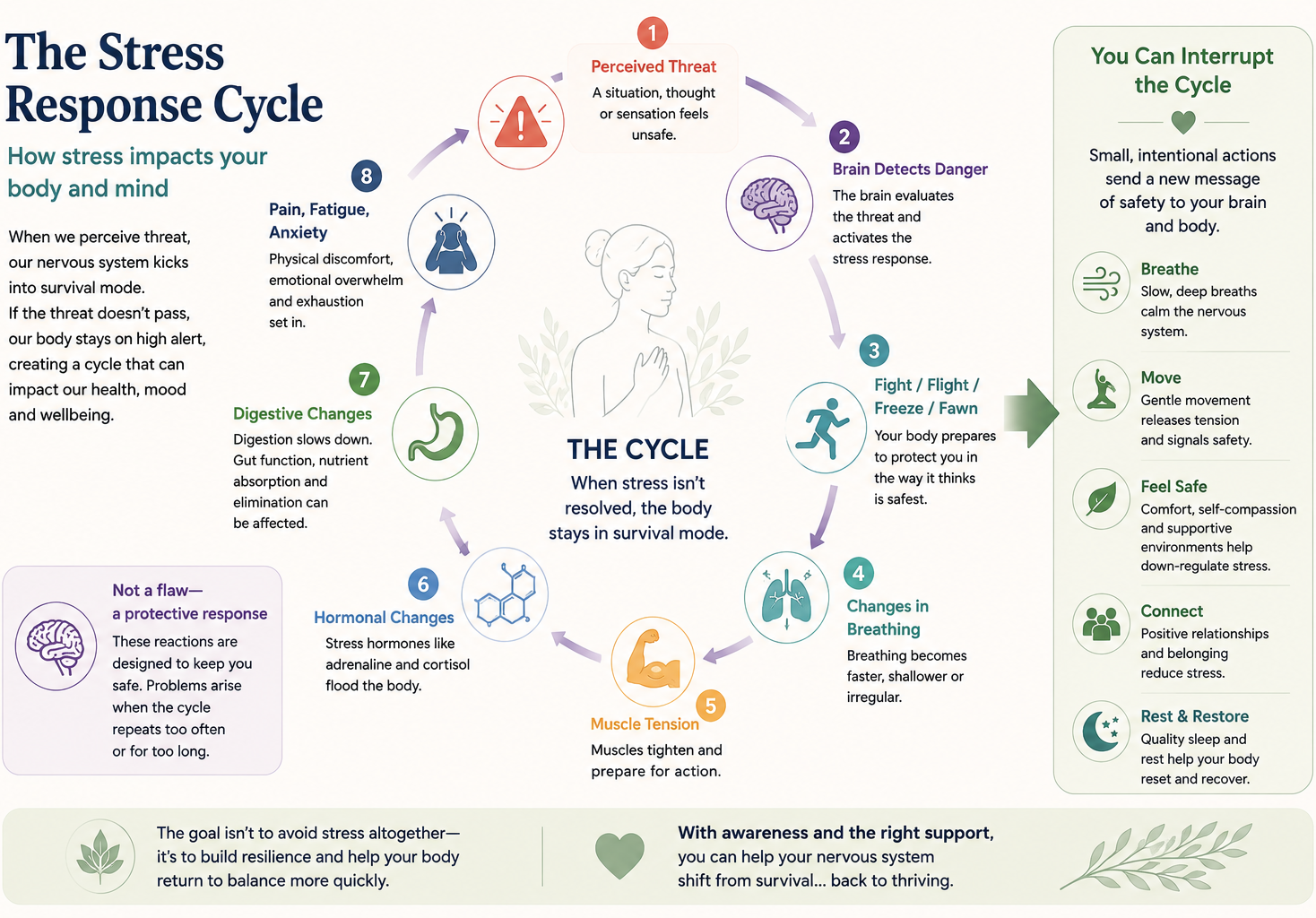
For many years, stress was described in terms of only two responses: fight or flight.
We now recognise that the nervous system has several additional protective strategies.
Fight
When the nervous system believes confrontation offers the best chance of survival, it prepares the body to defend itself.
You may become irritable, argumentative, frustrated or unusually impatient.
Your muscles tense.
Your voice may become louder.
Your thoughts can narrow towards identifying and eliminating the perceived threat.
While this response can be lifesaving in genuine emergencies, it may also appear during everyday situations such as family disagreements, workplace conflict or traffic jams.
Flight
If escaping seems safer than confronting the danger, the body prepares to move away.
This doesn’t necessarily mean physically running.
Modern versions of flight include staying constantly busy, overworking, avoiding difficult conversations, excessive exercise or continually distracting yourself to escape uncomfortable feelings.
Many people who describe themselves as “always on the go” are unknowingly spending much of their lives in a subtle form of flight mode.
Freeze
Sometimes neither fighting nor escaping seems possible.
In these situations, the nervous system may enter a freeze response.
People often describe feeling numb, disconnected, unable to think clearly or strangely detached from what’s happening around them.
Decision-making becomes difficult.
Motivation disappears.
Even simple tasks can feel overwhelming.
Although freeze can be distressing, it is another highly intelligent survival strategy. Across the animal kingdom, freezing can reduce the likelihood of detection by predators or conserve energy when escape is impossible.
Fawn
Another protective strategy that has gained increasing recognition is the fawn response.
Rather than confronting or escaping danger, a person attempts to stay safe by pleasing others, avoiding conflict or putting everyone else’s needs before their own.
People who frequently fawn may struggle to say no, feel responsible for everyone else’s emotions or constantly seek approval.
While these behaviours often develop for understandable reasons, particularly during childhood or prolonged stress, they can become exhausting if they persist into adulthood.
Why These Responses Can Become Stuck
In a healthy nervous system, these protective states are temporary.
You encounter a challenge.
Your body responds appropriately.
The situation resolves.
Your nervous system returns to balance.
Unfortunately, this doesn’t always happen.
Repeated stress, unresolved trauma, persistent pain, ongoing uncertainty, chronic illness or significant life events can teach the nervous system that the world is less predictable than it once believed.
Over time, it may become increasingly sensitive.
Imagine a smoke alarm.
When functioning well, it sounds only when there is genuine danger.
But if it becomes overly sensitive, it may start going off every time someone burns a piece of toast.
The alarm isn’t faulty because it sounds.
It’s faulty because it sounds too often.
The nervous system can behave in a remarkably similar way.
Its threshold for detecting danger becomes lower.
Situations that were once manageable begin to feel overwhelming.
Minor setbacks provoke major physiological responses.
Recovery takes longer.
Eventually, the body may spend more time preparing for danger than enjoying safety.
The Window of Tolerance
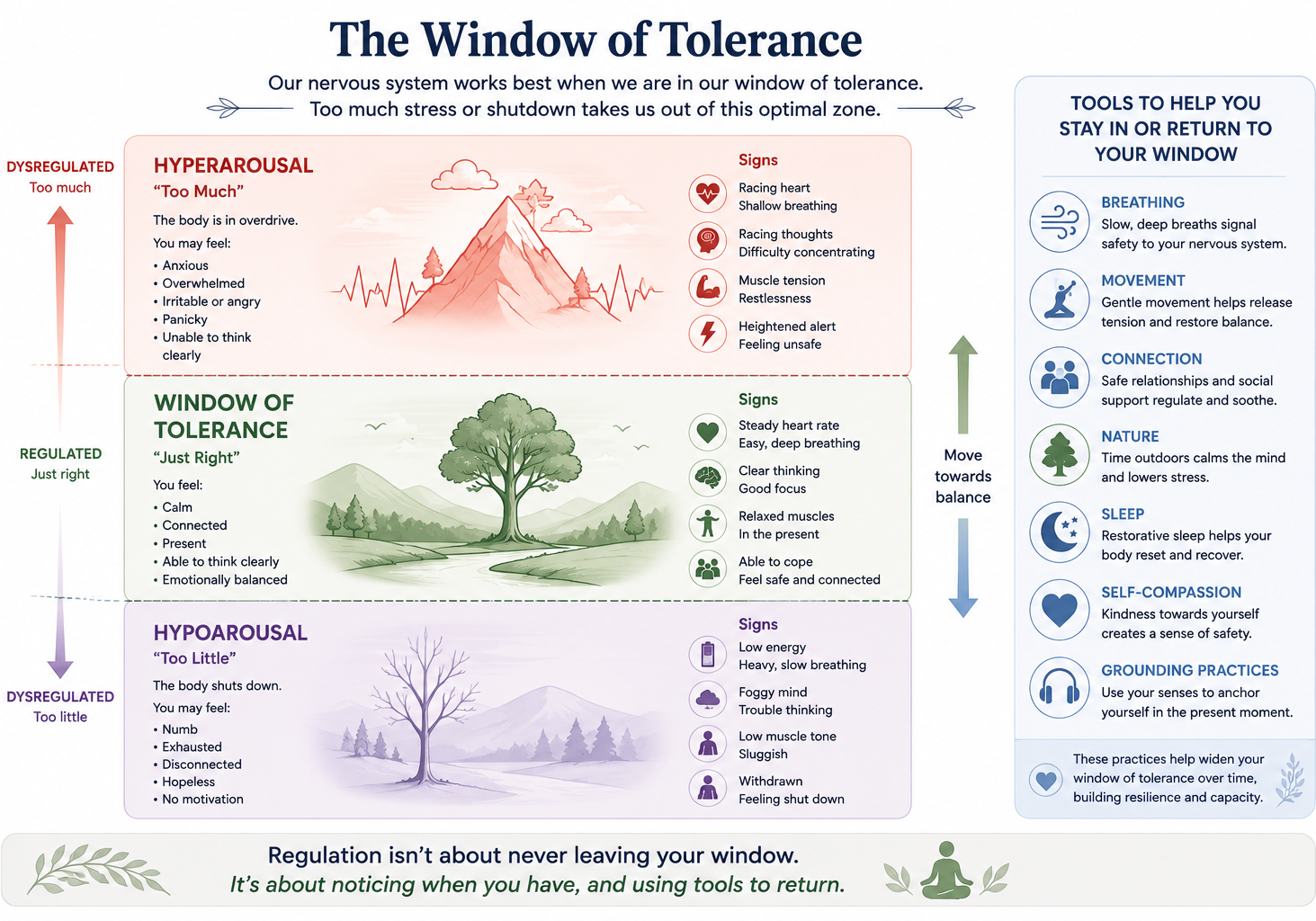
One of the most helpful ways of understanding nervous system regulation is through a concept known as the Window of Tolerance.
Imagine your nervous system has an “optimal zone” – a window in which you feel calm, present and able to cope with whatever life brings.
When you’re within this window, you can usually think clearly, make decisions, solve problems and regulate your emotions without becoming overwhelmed. You can adapt to challenges, recover from setbacks and remain connected to the people around you, even during times of stress.
This doesn’t mean life is always easy.
You may still feel worried before an important meeting, frustrated by a traffic jam or saddened by difficult news. The difference is that these emotions feel manageable. Your nervous system can respond to the challenge and then gradually return to a state of balance once it has passed.
Sometimes, however, stress becomes greater than our nervous system can comfortably manage.
When this happens, we may move outside our Window of Tolerance.
Hyperarousal: When the Nervous System Speeds Up
If your nervous system shifts above your window, it enters a state of hyperarousal.
This is where the sympathetic nervous system becomes dominant, preparing your body for action.
You may notice:
- racing thoughts
- anxiety or panic
- irritability or anger
- muscle tension
- shallow or rapid breathing
- a pounding heart
- difficulty concentrating
- feeling constantly “on edge”
In this state, your brain is prioritising survival over careful reasoning. Even relatively small challenges can feel overwhelming because your nervous system is scanning continuously for potential danger.
Hypoarousal: When the Nervous System Slows Down
At other times, particularly after prolonged or overwhelming stress, the nervous system may move below the Window of Tolerance into a state known as hypoarousal.
Rather than preparing for action, the body begins to conserve energy.
People often describe feeling:
- emotionally numb
- exhausted
- disconnected from themselves or others
- unable to think clearly
- unmotivated
- “shut down”
- detached or withdrawn
This response can be confusing because it may appear to be the opposite of stress.
In reality, it is another highly intelligent survival strategy.
When the nervous system believes that fighting or escaping is no longer possible, slowing everything down may be its way of offering protection.
The Goal Isn’t to Stay Calm All the Time
It’s important to remember that healthy nervous systems move in and out of these states throughout the day.
Everyone experiences moments of anxiety, frustration, sadness or exhaustion.
The aim is not to remain perfectly calm all the time.
Instead, the goal is to recognise when we’ve drifted outside our Window of Tolerance and gently support our nervous system in returning.
This is where practices such as slow breathing, mindful movement, time in nature, restorative sleep, meaningful social connection and relaxation become so valuable.
Rather than forcing the body to relax, these experiences send repeated messages of safety to the brain.
Over time, something remarkable begins to happen.
Your Window of Tolerance can gradually become wider.
Situations that once felt overwhelming become more manageable.
You recover more quickly after stressful events.
You become less reactive and more resilient – not because life has become easier, but because your nervous system has learned that it is capable of returning to balance.
This ability to adapt, recover and become more resilient is one of the nervous system’s greatest strengths.
And it is made possible by one of the brain’s most extraordinary abilities: its capacity to change through experience.
The Body Keeps Score – But It Also Learns
Every experience you have influences your nervous system.
Positive experiences strengthen pathways associated with safety, confidence and resilience.
Repeated experiences of stress strengthen pathways associated with vigilance and protection.
This doesn’t mean you are permanently programmed by your past.
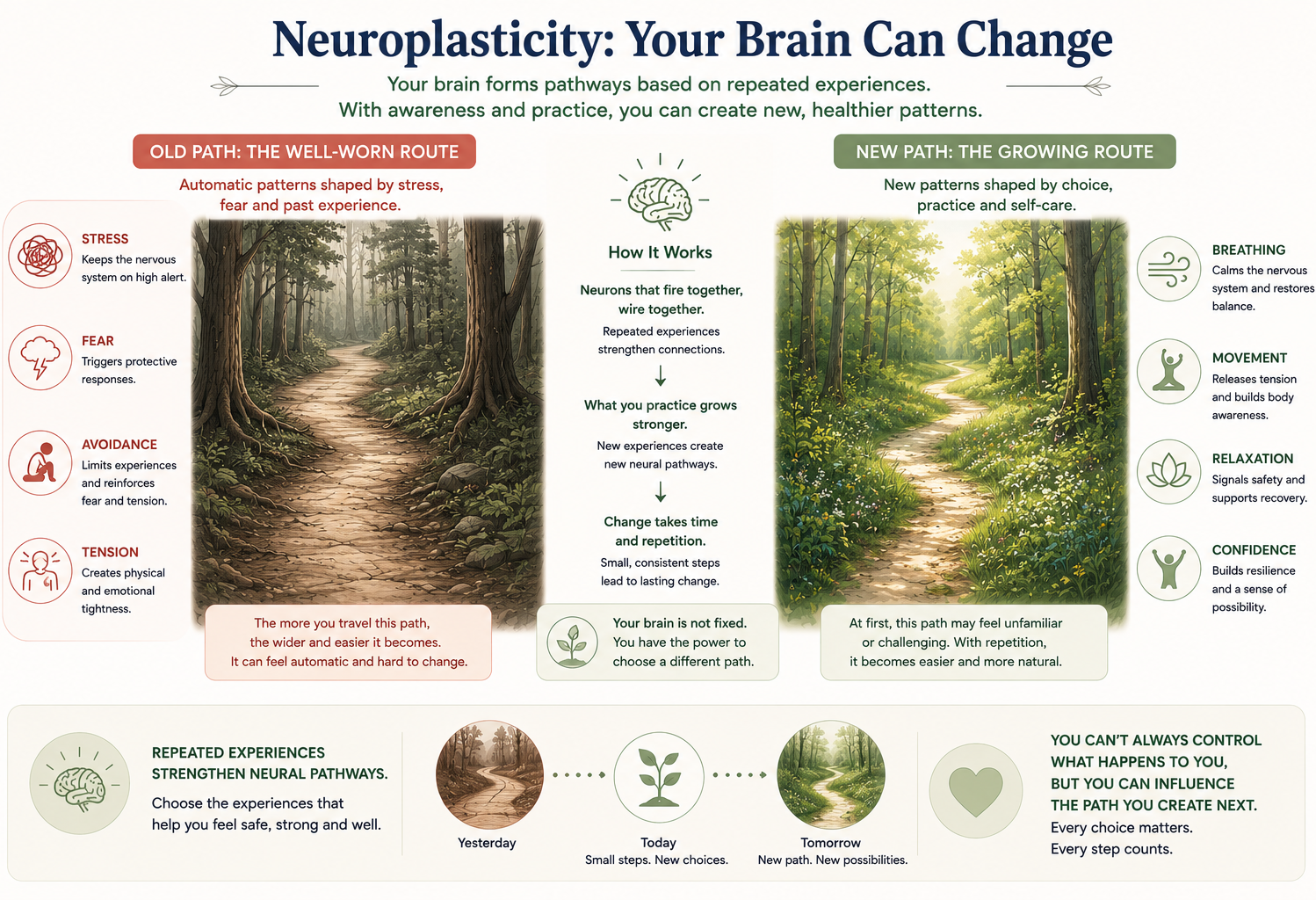
Rather, it reflects one of the brain’s most remarkable characteristics: it learns through repetition.
The phrase “neurons that fire together, wire together” captures this beautifully.
The more often a particular pattern is repeated, the stronger and more efficient the underlying neural connections become.
Initially, this learning is helpful.
If you repeatedly practise playing the piano, driving a car or riding a bicycle, your nervous system becomes more efficient at those activities.
The same principle applies to stress responses.
If your nervous system repeatedly practises anxiety, muscle tension, catastrophising or hypervigilance, those responses can gradually become more automatic – not because you are weak or lacking willpower, but because your brain is doing what it was designed to do: become more efficient at whatever it practises most often.
The encouraging news is that this process works both ways.
Just as the nervous system can learn patterns of protection, it can also learn patterns of safety.
Every time you breathe slowly, move mindfully, experience genuine connection, practise relaxation or teach your body that it is safe, you are strengthening a different set of neural pathways.
These small moments may seem insignificant on their own, but over weeks and months they can gradually reshape how your nervous system responds to the world.
This is why nervous system regulation isn’t about finding one magical technique.
It’s about repeatedly giving your brain and body experiences that reinforce safety, flexibility and resilience.
In the next section, we’ll explore how the nervous system influences chronic pain, muscle tension and emotional wellbeing – and why understanding this connection can completely change the way we think about healing.
How Your Nervous System Influences Pain, Muscle Tension and Physical Health
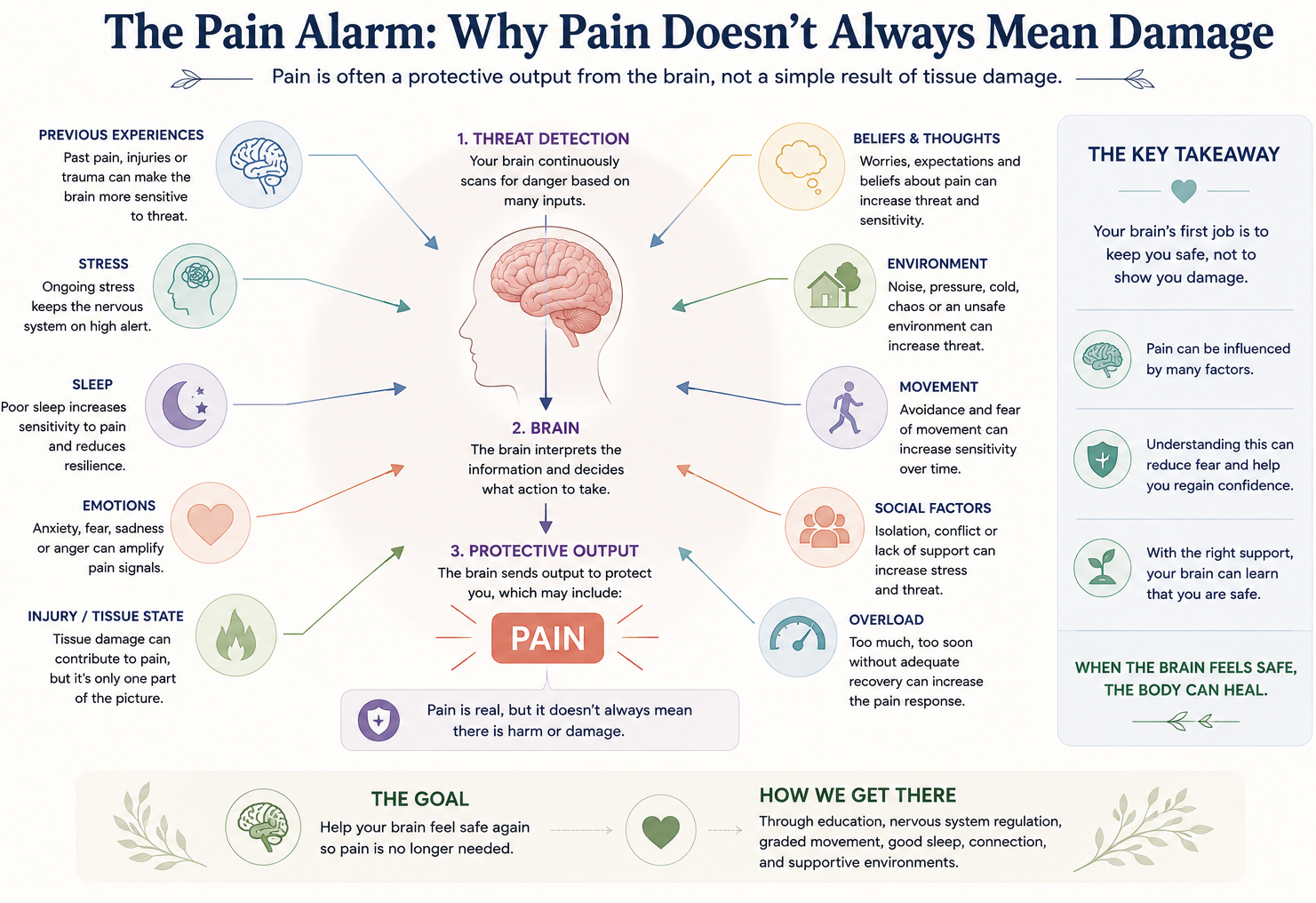
One of the biggest shifts in modern healthcare has been the growing recognition that pain is not simply the result of damaged tissues.
That statement surprises many people.
After all, if your back hurts, surely the problem must be in your back?
If your neck is tight, doesn’t that mean the muscles themselves are the problem?
The answer is both yes and no.
Of course, injuries, arthritis, inflammation and structural changes can all contribute to pain. But research over the past few decades has shown that pain is much more complex than previously thought. The brain and nervous system play an essential role in deciding whether pain is produced, how intense it feels and how long it persists.
This doesn’t mean pain is imaginary.
It means pain is a protective experience created by the nervous system when it believes protection is needed.
Pain Is an Alarm, Not a Damage Meter
Imagine accidentally touching a hot pan.
Before you’ve consciously registered what’s happened, you’ve already pulled your hand away.
Pain has done its job.
It has protected you.
But now imagine a smoke alarm that continues sounding long after the toast has stopped burning.
This is similar to what can happen in chronic pain.
Initially, pain may have been triggered by a genuine injury or inflammation. However, after weeks or months, the tissues themselves may have healed while the nervous system continues to behave as though danger is still present.
Scientists sometimes refer to this as central sensitisation, where the nervous system becomes increasingly sensitive and responsive.
It’s rather like turning up the volume on a microphone.
The same input now produces a much louder output.
As a result, everyday movements, gentle pressure or even stress can begin to trigger pain, despite there being little or no ongoing tissue damage.
Understanding this can be enormously reassuring.
It means that persistent pain does not necessarily indicate ongoing injury. Instead, it may reflect a nervous system that has become exceptionally good at protecting you.
The encouraging news is that, just as the nervous system can become more sensitive, it can also become less sensitive again.
Why Stress Often Shows Up in the Body
Have you ever noticed that during stressful periods your shoulders creep towards your ears?
Or that your jaw feels tight?
Perhaps your lower back begins aching during a particularly busy week.
These are not coincidences.
When your brain perceives threat, it automatically increases muscle tone throughout the body in preparation for action.
This is an incredibly useful response if you genuinely need to run, climb or defend yourself.
The problem is that modern stress rarely ends with a physical release.
Instead, many of us sit at our desks, continue working, suppress our emotions and carry the physiological preparation for action throughout the day.
Over time, muscles can remain partially contracted for hours, days or even months.
This persistent increase in muscle tension may contribute to:
- neck and shoulder pain
- tension headaches
- jaw pain and teeth grinding
- lower back pain
- hip tightness
- reduced flexibility
- fatigue
- feelings of stiffness
The muscles themselves are not choosing to tighten.
They are responding faithfully to the instructions they receive from the nervous system.
For this reason, treating muscles alone without considering the nervous system may provide only temporary relief.
The body’s alarm system also needs reassurance that it is safe to let go.
Why Breathing Changes Under Stress
Breathing is unique because it happens automatically, yet we can also influence it consciously.
This makes it one of the most powerful ways of communicating directly with the nervous system.
When we feel calm, breathing tends to be:
- slower
- quieter
- deeper
- more diaphragmatic
- rhythmical
During stress, however, breathing often becomes:
- faster
- shallower
- higher in the chest
- more irregular
- punctuated by breath holding or sighing
Many people develop these breathing habits so gradually that they no longer notice them.
Yet altered breathing patterns can themselves reinforce the body’s perception of danger.
Rapid breathing changes the balance of oxygen and carbon dioxide in the blood, influences blood vessel diameter, affects muscle function and sends continuous feedback to the brain about the body’s internal state.
In other words, the way we breathe both reflects and influences how safe our nervous system believes we are.
This is one reason why breathing practices can be so effective.
Rather than simply helping us “relax,” they provide the nervous system with repeated evidence that immediate danger has passed.
Over time, this can help shift the body away from chronic survival mode and towards a state more conducive to healing.
Chronic Stress and Inflammation
Another fascinating area of research explores the relationship between chronic stress and inflammation.
Inflammation is an essential part of the body’s healing response.
Without it, wounds wouldn’t heal and infections couldn’t be controlled.
However, when stress becomes prolonged, the communication between the nervous, endocrine and immune systems can become disrupted.
Stress hormones such as cortisol are designed to help us cope with short-term challenges.
When these systems remain activated over long periods, inflammatory processes may become altered.
Researchers are increasingly exploring the role of chronic low-grade inflammation in conditions such as cardiovascular disease, type 2 diabetes, autoimmune conditions, depression and chronic pain.
This doesn’t mean stress is the sole cause of these illnesses.
Health is influenced by a complex interaction of genetics, lifestyle, nutrition, environment, sleep, movement, social relationships and many other factors.
However, supporting nervous system regulation may help create a more favourable internal environment in which healing and recovery can take place.
The Biopsychosocial Model: Seeing the Bigger Picture
For many years, healthcare focused primarily on identifying structural abnormalities.
If something hurt, the assumption was that something must be damaged.
Although this approach remains important, we now recognise that it tells only part of the story.
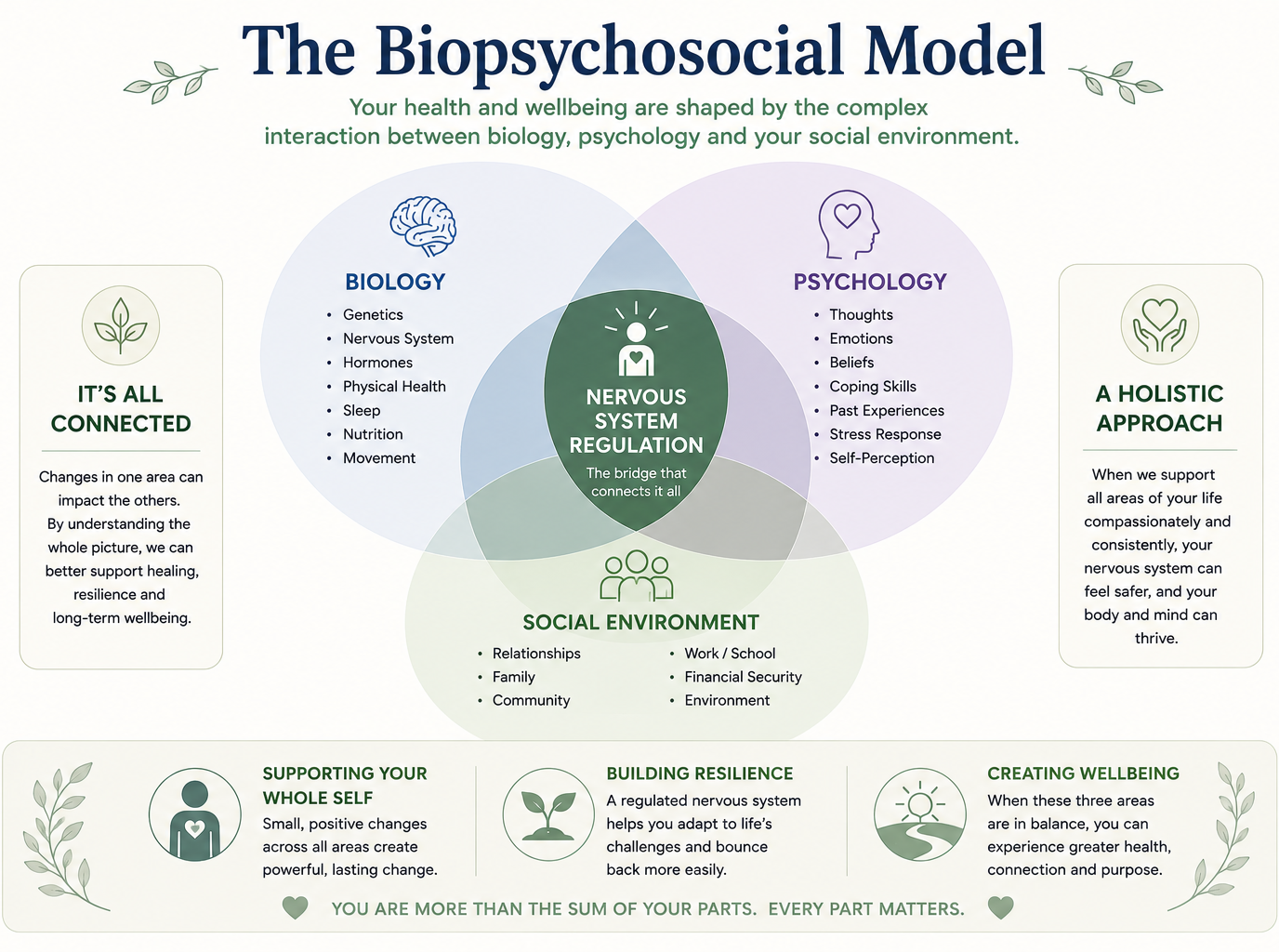
The biopsychosocial model acknowledges that our health is influenced by an interaction of biological, psychological and social factors.
These include:
Biological factors
- injury
- inflammation
- genetics
- hormones
- sleep
- nutrition
- physical activity
- illness
Psychological factors
- stress
- beliefs
- emotions
- previous experiences
- expectations
- confidence
- fear
Social factors
- work
- relationships
- financial pressures
- family life
- culture
- community
- social support
The nervous system sits at the centre of this interaction.
It continually gathers information from every aspect of our lives before deciding how best to protect us.
For example, two people may experience exactly the same back injury.
One recovers within a few weeks.
The other develops persistent pain lasting several years.
Why?
The answer is rarely found in the MRI scan alone.
Sleep quality, stress levels, previous pain experiences, fear of movement, social support, work demands, mood and many other factors all influence how the nervous system responds.
This doesn’t diminish the reality of the pain.
Quite the opposite.
It helps explain why two people with identical scans can experience completely different levels of discomfort.
Healing Is More Than Fixing a Body Part
Once we appreciate the role of the nervous system, our understanding of healing begins to change.
Recovery becomes less about finding the one damaged structure that needs repairing and more about creating an environment in which the whole person can thrive.
This doesn’t mean abandoning medical investigations or ignoring structural problems when they exist.
Rather, it means recognising that lasting recovery often involves supporting multiple systems simultaneously.
For some people, this may include improving sleep.
For others, increasing physical activity gradually and confidently.
For someone else, it may involve learning healthier breathing patterns, reducing chronic stress, addressing nutritional deficiencies, reconnecting with supportive relationships or finding ways to experience more joy and purpose.
Each of these sends important messages of safety back to the nervous system.
Over time, these messages accumulate.
The nervous system gradually becomes less vigilant.
Muscles begin to soften.
Movement becomes easier.
Pain may become less intrusive.
Energy improves.
The body remembers what safety feels like.
Why Change Is Always Possible: The Power of Neuroplasticity
Perhaps the most hopeful discovery in modern neuroscience is that the nervous system is not fixed.
Throughout life, your brain and nervous system continue adapting in response to your experiences.
Every movement you make.
Every conversation you have.
Every breathing exercise.
Every walk in nature.
Every moment of laughter.
Every period of restful sleep.
Every experience of genuine safety.
All of these are shaping your nervous system.
Just as repeated stress strengthens survival pathways, repeated experiences of calm, confidence and connection strengthen pathways associated with resilience.
Healing is therefore not usually about one dramatic breakthrough.
It is far more often the result of hundreds of small, repeated experiences that gradually teach the nervous system a new story.
A story in which the world feels a little safer.
A story in which your body no longer needs to remain constantly on guard.
A story in which protection can gradually give way to recovery.
The remarkable thing is that your nervous system is capable of learning that story at any age.
The next question, of course, is how.
Fortunately, many of the most effective ways of supporting the nervous system are available to all of us – and many of them are surprisingly simple.
How to Support and Regulate Your Nervous System
If you’ve read this far, you may be wondering what you can actually do to help your nervous system function more effectively.
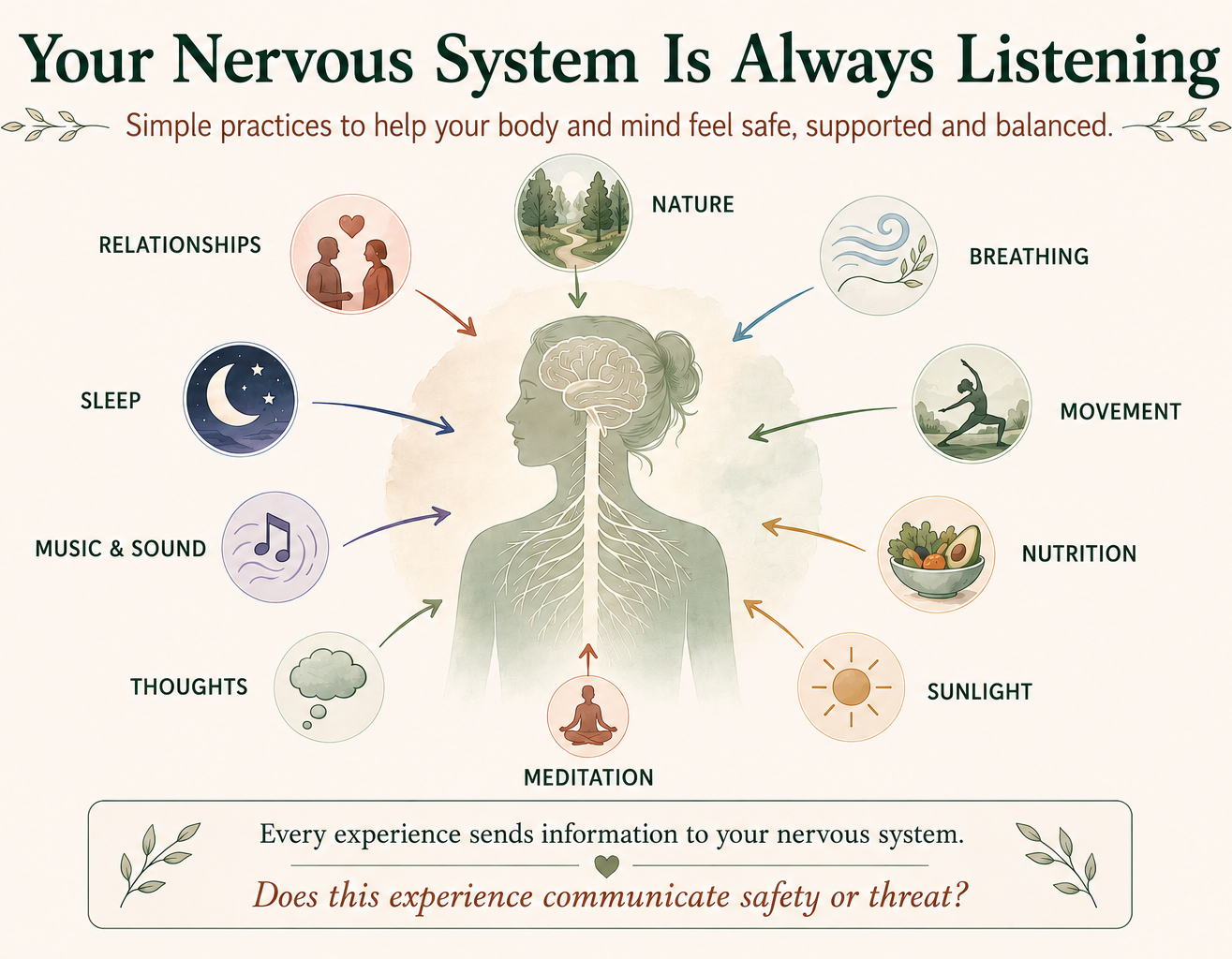
The good news is that your nervous system is constantly learning. Every experience either reinforces patterns of protection or strengthens patterns of safety and resilience.
The aim isn’t to avoid stress altogether – that would be impossible. Instead, the goal is to help your nervous system become more adaptable, allowing it to respond appropriately to life’s challenges and then return to a state of balance afterwards.
Below are some of the most effective, evidence-informed ways to support nervous system regulation.
1. Move Your Body Every Day
Movement is one of the most powerful ways of communicating with your nervous system.
When we move, we’re not simply exercising our muscles and joints. We’re also providing the brain with an enormous amount of sensory information about balance, coordination, position, strength and safety.
Every step you take sends thousands of signals from your muscles, tendons and joints back to your brain.
These signals help your brain build confidence in your body’s abilities.
Regular movement also improves circulation, supports lymphatic flow, enhances brain function, helps regulate blood sugar, improves sleep quality and stimulates the release of chemicals associated with improved mood and wellbeing.
Perhaps most importantly, movement teaches the nervous system that the body is capable rather than fragile.
This is particularly important for people living with persistent pain, who often begin avoiding movement because they fear making their symptoms worse.
While it’s important to respect injuries and work within your own limits, appropriately graded movement can gradually help rebuild confidence and reduce the nervous system’s perception of danger.
Remember, movement doesn’t have to mean intense exercise.
Walking.
Swimming.
Gardening.
Dancing.
Tai Chi.
Yoga.
Stretching.
Playing with your children or grandchildren.
They all provide valuable input to your nervous system.
The best form of movement is often the one that you genuinely enjoy and can sustain consistently.
2. Learn to Breathe Well
Breathing is one of the few body systems that operates both automatically and voluntarily.
This gives us a remarkable opportunity to influence the nervous system directly.
Many people unknowingly develop breathing patterns that reinforce stress.
They breathe rapidly into the upper chest.
They hold their breath while concentrating.
They sigh frequently.
They over-breathe during periods of anxiety.
Although these patterns may feel normal, they continually signal to the brain that something requires attention.
Learning slower, quieter, more diaphragmatic breathing can begin to change that conversation.
Gentle breathing practices help stimulate the parasympathetic nervous system, improve carbon dioxide tolerance, encourage more efficient oxygen delivery to tissues and create a physiological environment associated with rest and recovery.
This doesn’t mean you need to spend hours each day practising breathing exercises.
Even a few minutes of slow, relaxed breathing can help interrupt the cycle of chronic stress.
Over time, these moments accumulate, gradually teaching the nervous system that calm is not only possible but familiar.
3. Make Time for Restorative Practices
In today’s culture, productivity is often celebrated while rest is viewed as something to be earned.
Yet recovery is not a luxury.
It is a biological necessity.
Every system within your body requires periods of restoration.
Practices such as meditation, mindfulness, Yoga Nidra, gentle yoga and guided relaxation help shift the nervous system away from constant vigilance.
During these quieter moments, heart rate slows, breathing softens, muscle tension reduces and the brain begins processing information differently.
Many people initially find relaxation surprisingly difficult.
If your nervous system has become accustomed to constant activity, slowing down may actually feel uncomfortable at first.
This is completely normal.
Like any skill, relaxation becomes easier with regular practice.
The nervous system gradually learns that stillness is safe.
4. Spend Time in Nature
Have you ever noticed how different you feel after walking through woodland, sitting beside the sea or simply spending time in a park?
Nature provides a rich sensory environment that many nervous systems find deeply regulating.
The sounds of birdsong, the rhythm of waves, the movement of leaves in the wind and the visual complexity of natural landscapes appear to reduce mental fatigue while gently calming the body’s stress response.
Research suggests that spending time in green spaces may reduce stress hormones, lower blood pressure, improve mood and support cognitive function.
Nature also encourages something that modern life often discourages: slowing down.
Instead of rushing from one task to another, we become more aware of our surroundings, our breathing and our own internal experience.
5. Prioritise Sleep
Sleep is one of the most important times for nervous system recovery.
During sleep, the brain consolidates memories, clears metabolic waste products, regulates hormones and supports countless repair processes throughout the body.
Poor sleep, however, increases sensitivity to stress.
When we’re tired, even relatively minor challenges can feel overwhelming.
Pain often feels more intense.
Emotional regulation becomes more difficult.
Concentration declines.
For many people, improving sleep habits becomes one of the most effective ways of supporting overall nervous system health.
Simple habits such as maintaining a consistent bedtime, reducing evening screen use, limiting caffeine later in the day and creating a calm bedtime routine can make a meaningful difference.
6. Nourish Your Body
Your nervous system depends upon a continuous supply of nutrients to function effectively.
Blood sugar fluctuations, dehydration and nutritional deficiencies can all influence how your brain and body respond to stress.
Eating regular, balanced meals that include adequate protein, healthy fats, fibre and a wide variety of colourful fruits and vegetables helps provide the building blocks required for healthy nervous system function.
The gut also plays a surprisingly important role.
Often referred to as the “second brain,” the digestive system communicates continuously with the central nervous system through neural, hormonal and immune pathways.
Supporting gut health through a varied, nutrient-rich diet may therefore benefit both physical and emotional wellbeing.
7. Connect With Other People
Humans are social beings.
From infancy onwards, our nervous systems develop through relationships.
Feeling seen, heard and understood sends powerful signals of safety to the brain.
Meaningful conversations.
Shared laughter.
Physical affection.
Acts of kindness.
A supportive community.
All of these help regulate the nervous system.
Conversely, prolonged loneliness and social isolation can increase stress responses and negatively affect both physical and mental health.
Connection doesn’t necessarily require large social gatherings.
Sometimes a conversation with one trusted friend can be enough to help the nervous system feel grounded again.
8. Experience Joy, Creativity and Play
When we think about nervous system regulation, it’s easy to focus only on reducing stress.
Yet creating positive experiences is equally important.
Laughter.
Music.
Painting.
Dancing.
Cooking.
Photography.
Playing an instrument.
Learning a new skill.
Spending time with pets.
Creative activities engage different areas of the brain and often encourage states of curiosity, flow and enjoyment.
These experiences help broaden the nervous system’s repertoire beyond survival.
Rather than simply avoiding stress, we begin actively cultivating wellbeing.
9. Be Mindful of the Information You Consume
Your nervous system responds not only to events happening around you, but also to the information you absorb throughout the day.
Continuous exposure to distressing news, emotionally charged social media or endless notifications can keep the brain in a heightened state of alertness.
This doesn’t mean ignoring the world.
It means becoming intentional about what you allow into your attention.
Giving yourself permission to step away from screens, take breaks from the news and create periods of quiet can help reduce unnecessary stimulation.
Think of it as creating moments in which your nervous system can breathe.
10. Remember That Healing Happens Through Repetition
Perhaps the most important principle of all is this:
Your nervous system changes through repetition.
Not intensity.
Not perfection.
Not willpower.
Every time you choose to take a slow breath instead of rushing.
Every time you go for a gentle walk.
Every time you practise relaxation.
Every time you spend time in nature.
Every time you move with confidence instead of fear.
You are teaching your nervous system something new.
One experience may not transform your life overnight.
But hundreds of small experiences, repeated consistently over weeks and months, can gradually reshape the way your brain and body respond to the world.
This is how neuroplasticity works.
Small changes.
Repeated often.
Leading to profound transformation over time.
Working With Your Nervous System, Not Against It
One of the greatest misconceptions about health is that we need to fight our bodies.
We speak about battling pain.
Fighting anxiety.
Conquering fatigue.
Winning the war against stress.
But what if your body isn’t the enemy?
What if your symptoms are not signs that your body is broken, but evidence that it has been working tirelessly to protect you?
When we begin viewing the nervous system through this lens, our relationship with our body starts to change.
Instead of asking, “What’s wrong with me?” we begin asking, “What is my nervous system trying to protect me from?”
This subtle shift often opens the door to greater self-compassion.
And perhaps that’s one of the most powerful forms of healing there is.
The nervous system responds remarkably well to kindness, consistency and patience.
It doesn’t need perfection.
It simply needs repeated experiences of safety.
The more often we provide those experiences, the more our nervous system learns that it no longer needs to remain permanently on guard.
Bringing It All Together: Your Nervous System Is Always Listening
One of the most important things to remember is that your nervous system isn’t trying to make your life difficult.
It isn’t creating pain, anxiety or muscle tension to punish you.
It isn’t working against you.
It is constantly trying to keep you safe.
Sometimes it simply becomes a little too good at its job.
Perhaps it learned, through repeated experiences, that the world is unpredictable.
Perhaps it became highly sensitive after an injury, a period of prolonged stress, illness or emotional trauma.
Perhaps it has simply never been given enough opportunities to experience genuine safety and recovery.
Whatever the reason, your nervous system is not fixed.
It remains adaptable throughout your life.
This remarkable capacity for change is one of the most encouraging discoveries in modern neuroscience.
Every positive experience you have is helping to shape your brain.
Every nourishing meal.
Every good night’s sleep.
Every slow breath.
Every enjoyable walk.
Every meaningful conversation.
Every moment spent laughing with friends.
Every time you choose self-compassion instead of self-criticism.
Each of these experiences sends information to your nervous system.
Each one helps build a brain and body that become increasingly resilient, flexible and able to recover from life’s inevitable challenges.
Healing is rarely a single event.
More often, it is a gradual process of teaching your nervous system that the danger has passed.
Your Body Wants to Heal
Our bodies possess an extraordinary capacity for healing.
Every day, damaged cells are repaired.
Proteins are rebuilt.
Bones remodel.
Skin renews itself.
The immune system identifies and removes harmful organisms.
The brain forms new neural connections.
This remarkable maintenance work happens quietly, often without us even noticing.
The nervous system plays a central role in coordinating many of these processes.
When we remain trapped in chronic survival mode, the body’s resources are naturally directed towards protection.
As we begin to experience greater regulation and recovery, more energy can be devoted to repair, restoration and adaptation.
This doesn’t mean nervous system regulation is a cure for every illness.
Far from it.
Health is complex, and many conditions require medical diagnosis and treatment.
However, supporting the nervous system creates a healthier internal environment in which every other aspect of healing has the opportunity to work more effectively.
Rather than asking your body to fight harder, perhaps the greatest gift you can offer it is the opportunity to feel safe enough to heal.
A Whole-Person Approach to Health
One of the reasons I find the nervous system so fascinating is that it reminds us we are never just a collection of muscles, bones or organs.
Everything is connected.
The way we breathe influences our heart.
Our thoughts influence our muscles.
Movement affects our mood.
Sleep affects our immune system.
Relationships influence our hormones.
Our physical and emotional wellbeing are constantly interacting with one another.
This whole-person perspective sits at the heart of everything I do.
As a physiotherapist, I’ve always been interested in helping people understand why their symptoms develop – not simply treating the area that hurts.
Over the years, that curiosity has led me to explore breathwork, yoga, meditation, sound therapies, lifestyle medicine and other approaches that support the nervous system alongside traditional physiotherapy.
These approaches don’t replace evidence-based medical care.
Instead, they complement it by helping create the conditions in which the body can function at its best.
How Breath, Yoga and Sound Can Support Nervous System Regulation
Many of the therapies I offer share one important characteristic.
They work with the nervous system rather than simply focusing on symptoms.
Breath Coaching
Learning to breathe more efficiently can help improve the dialogue between the brain and body.
Breath coaching isn’t simply about taking deeper breaths.
It’s about developing breathing patterns that support healthy nervous system function, improve resilience to stress and encourage more efficient oxygen delivery throughout the body.
With regular practice, breathing exercises can become a valuable tool for calming the mind, reducing unnecessary muscle tension and improving overall wellbeing.
Yoga
Yoga offers much more than increased flexibility.
By combining mindful movement, breathing and focused attention, yoga provides the nervous system with repeated experiences of safety, balance and body awareness.
Whether through gentle restorative practices, Yin Yoga or more active styles, yoga encourages the body to move with ease rather than tension and helps cultivate greater awareness of the connection between mind and body.
Sound Therapy
For many people, carefully chosen sound, vibration and guided relaxation provide an opportunity to slow down in ways that are difficult to achieve in everyday life.
Listening deeply, allowing the body to become still and creating space for quiet reflection may help some people experience profound relaxation and a greater sense of emotional and physical ease.
Combined with breath awareness and mindful attention, these practices can become valuable additions to a broader nervous system regulation programme.


Small Changes Can Make a Big Difference
It’s easy to believe that improving your health requires dramatic changes.
In reality, the nervous system often responds best to small, consistent actions.
Five minutes of breathing practice.
A short walk outdoors.
Stretching before bed.
Turning off your phone for an hour.
Choosing rest instead of pushing through exhaustion.
These simple actions may seem insignificant in isolation.
But together, they gradually change the messages your brain receives every day.
Instead of repeatedly hearing, “The world is dangerous,” your nervous system begins hearing, “I am safe.”
That is where lasting change begins.
Final Thoughts
Your nervous system is with you every second of every day.
It influences how you move, how you breathe, how you think, how you sleep, how you experience pain and how you respond to the world around you.
Understanding it isn’t about becoming obsessed with every sensation or trying to eliminate stress completely.
It’s about developing a kinder relationship with your body.
It’s about recognising that many of the symptoms you experience may not be signs of weakness or failure, but evidence of a nervous system that has been working tirelessly to protect you.
And perhaps most importantly, it’s about remembering that change is possible.
The nervous system is remarkably adaptable.
With patience, repetition and the right support, it can learn new patterns.
It can become less reactive.
More resilient.
More balanced.
Every slow breath.
Every mindful movement.
Every moment of genuine rest.
Every experience of connection.
Every act of self-care.
These are not small things.
They are investments in the health of the remarkable system that influences every aspect of your life.
Your nervous system is always listening.
The question is: What message are you teaching it today?

