
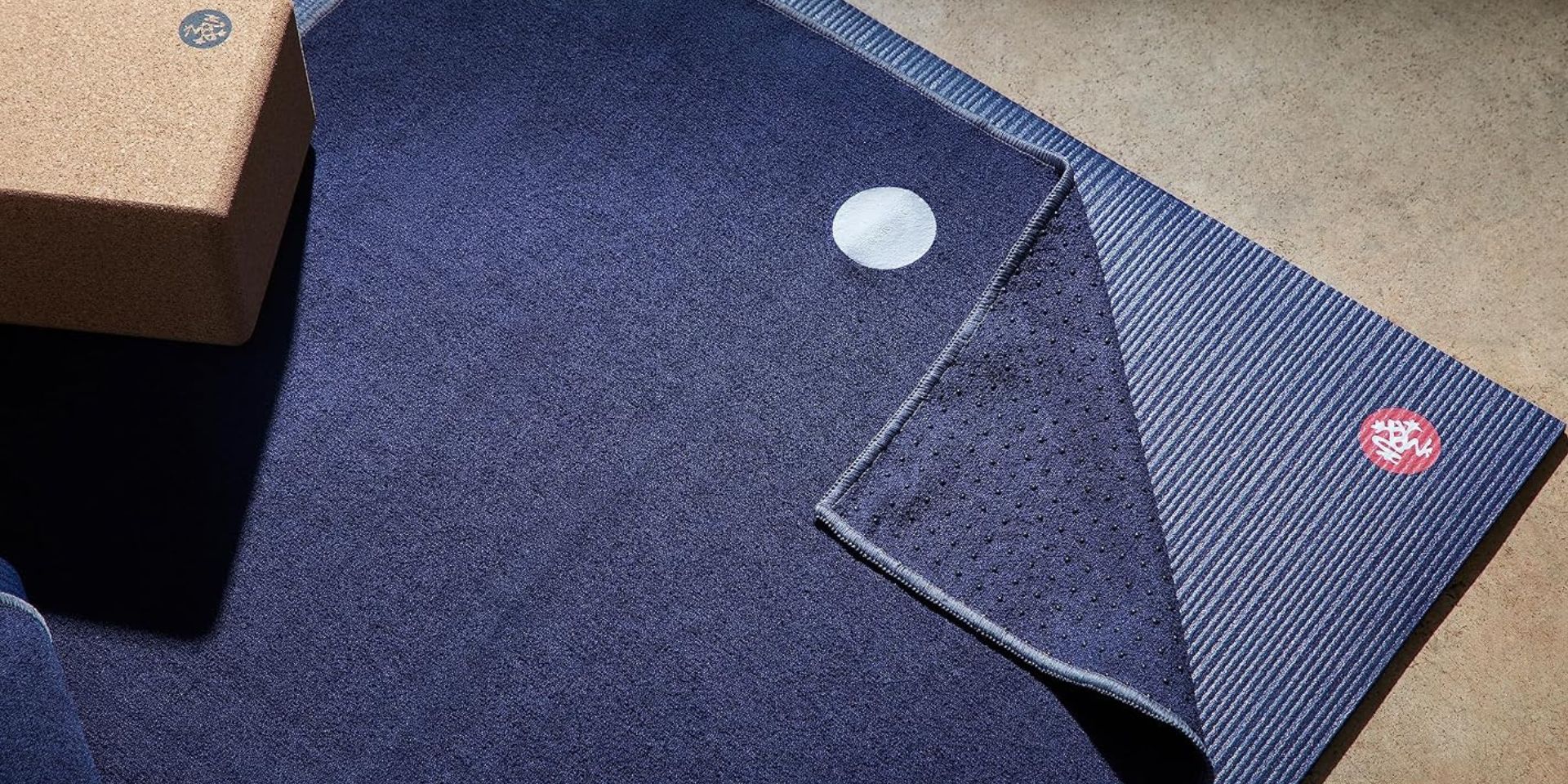
Do You Really Need a Yoga Mat Towel? Who They Help, How to Use One and How to Choose the Right One
A yoga mat towel can seem like one of those slightly unnecessary accessories invented to persuade us that our yoga kit is never quite complete.
After all, if you already own a yoga mat, why would you need to put a towel over it?
For some people, the honest answer is that they probably do not. If your mat provides reliable grip, your hands and feet remain fairly dry, and you practise comfortably without sliding, a yoga mat towel may not transform your experience.
For others, however, it can make a surprisingly significant difference.
A good yoga mat towel can absorb perspiration, create a more dependable surface beneath the hands and feet, protect a mat from repeated exposure to sweat and skin oils, and provide a more hygienic layer when using studio equipment. It can also be useful for travel, outdoor yoga, Pilates, home practice and any situation in which you would prefer not to place your face or body directly onto a shared mat.
I do not practise hot yoga, so I did not choose a yoga mat towel because I needed something capable of surviving a ninety-minute class in tropical temperatures. I became interested in yoga mat towels because of their broader usefulness: grip, hygiene, versatility and the simple fact that they are much easier to wash thoroughly than most yoga mats.
Here is what a yoga mat towel actually does, who is most likely to benefit from one, how to use it properly and what to look for before buying.
What Is a Yoga Mat Towel?
A yoga mat towel is a thin, absorbent towel designed to lie either across the entire length of a yoga mat or beneath a particular part of the body.
Unlike an ordinary bath or beach towel, a purpose-made yoga mat towel is usually shaped to match a yoga mat. It is generally lighter, thinner and quicker to dry, with a surface designed to absorb moisture without becoming bulky.
Many yoga mat towels also include features intended to stop them moving. These may include silicone dots, rubberised grips, textured undersides, corner pockets or small elastic anchors.
Yoga mat towels are available in two main forms.
A full-length yoga mat towel covers most or all of the mat. This is useful when you want protection and absorbency across the whole practice surface.
A hand towel covers only a smaller area, usually beneath the hands, forearms, head or upper body. This may be sufficient if perspiration is concentrated around the hands and face or if you want additional cushioning beneath the knees or elbows.
Some people use both: a full-length towel during vigorous practice and a smaller towel for wiping the face or placing under the head during relaxation.
Do You Need a Yoga Mat Towel?
A yoga mat towel is not an essential part of yoga. You do not need one to practise correctly, and owning one will not automatically improve your alignment, balance or strength.
It is better understood as a practical tool.
Its usefulness depends upon the kind of yoga you practise, the mat you use, the environment in which you practise and the way your body responds to movement and heat.
You may find a yoga mat towel helpful in the following situations:
1. Your Hands or Feet Become Sweaty
Perspiration is probably the most obvious reason to use a yoga mat towel.
Even outside a heated studio, the hands and feet can become damp during a strong flow, a warm summer class or a sequence involving repeated weight-bearing through the arms. Once moisture collects on the surface of a mat, poses such as Downward-Facing Dog, Plank and Warrior variations may begin to feel less secure.
This can be frustrating. It can also cause you to tense unnecessarily, gripping through the fingers, shoulders, toes or jaw in an attempt to stop yourself moving.
A yoga mat towel absorbs some of this moisture and may provide a more consistent surface. Many yoga mat towels become more effective once slightly damp, which is why some practitioners lightly mist the areas beneath their hands and feet before beginning.
A yoga mat towel should not be used to force the body into a position or to create so much traction that the joints feel fixed. However, reducing unwanted sliding can allow you to distribute weight more evenly and concentrate on the pose rather than worrying about your hands gradually disappearing towards the front of the mat.
2. Your Yoga Mat Becomes Slippery
Not all yoga mats provide the same amount of grip.
Some are deliberately smooth. Others feel secure when new but become less reliable as oils, moisturisers, dust and cleaning products accumulate on the surface. Certain mats also offer excellent dry grip but become slippery as soon as moisture appears.
A yoga mat towel can create an additional layer between you and the mat without requiring you to replace the mat immediately.
It is worth remembering, though, that a yoga mat towel cannot solve every mat problem. If a mat is badly worn, excessively thin, damaged or unstable on the floor, placing a yoga mat towel over it will not necessarily make it safe. The mat itself still needs to provide an appropriate foundation.
3. You Use a Shared Studio Mat
Studios clean their mats in different ways and with varying frequency. Even when a communal mat has been wiped after the previous class, you may simply feel more comfortable creating your own personal practice surface.
A full-length yoga mat towel provides a washable barrier between your skin and a shared mat. This can be particularly reassuring in poses in which the face, forearms, abdomen or bare feet remain in prolonged contact with the surface.
It does not make the environment sterile, and it is still sensible to follow the studio’s cleaning arrangements. It does, however, give you something of your own that can be taken home and washed.
For anyone who travels frequently, attends several studios or does not want to carry a full yoga mat, this may be one of the strongest arguments for buying a yoga mat towel.
4. You Want to Protect Your Mat
A good-quality yoga mat can be an investment. Repeated exposure to perspiration, skin oils, body lotions and cleaning sprays may eventually affect its surface.
A washable yoga mat towel can absorb much of what would otherwise settle directly onto the mat. This does not eliminate the need to clean your mat, but it may reduce the amount of intensive cleaning required and help keep the practice surface fresher.
A yoga mat towel is particularly useful if your mat has care instructions that discourage frequent soaking or the use of stronger cleaning products.
5. You Practise More Vigorous Forms of Yoga
You do not have to attend hot yoga to perspire.
Vinyasa, Ashtanga, Power Yoga and other continuous forms of practice can generate considerable heat. Longer holds, repeated Sun Salutations and arm balances may all increase moisture beneath the hands and feet.
Some people also perspire more readily than others. That is not a problem to be “fixed”; it simply changes what may be useful during practice.
A yoga mat towel can make the transition between poses feel more predictable, especially when the practice moves quickly and there is little opportunity to stop and wipe the mat.
6. You Do Practise Hot Yoga
Although hot yoga is not part of my own practice, it is the setting in which a yoga mat towel is most commonly used.
Heated classes are deliberately designed to make the body warm and, in many cases, extremely sweaty. A standard mat may quickly become covered with moisture. A full-length, highly absorbent yoga mat towel is therefore often more practical than repeatedly stopping to dry separate areas.
For hot yoga, the most important qualities are usually absorbency, secure attachment to the mat, rapid drying and reliable grip when wet.
A yoga mat towel described as “sweat-activated” may feel less grippy when completely dry. Lightly misting the hand and foot areas at the beginning of the class can help until natural perspiration takes over.
7. You Travel With Your Yoga Practice
Travel yoga mats are useful, but even the lightest mat occupies space in a suitcase.
A yoga mat towel folds relatively flat and can be used over a borrowed mat, on carpet, on a hotel-room floor or as a clean layer on top of another exercise surface. It can also double as a gym towel, beach towel, meditation layer or light covering.
A yoga mat towel alone will not provide the cushioning or floor grip of a conventional mat. On polished floors, it may move unless it has a properly gripped underside. However, for someone who wants a versatile and washable item rather than a second bulky mat, it can be a practical compromise.
8. You Would Like Extra Comfort in Certain Poses
A smaller yoga towel can be folded and placed beneath the knees, wrists, elbows, heels or head.
This can be useful in kneeling poses, low lunges, forearm work and relaxation. It does not replace appropriate props where more substantial support is required, but it offers a quick way to soften contact with the floor.
As a physiotherapist and yoga teacher, I would emphasise that discomfort should not automatically be pushed through simply because a towel makes it more tolerable. Persistent wrist, knee or joint pain deserves proper modification and, where necessary, individual assessment.
The towel is there to improve comfort, not to disguise pain.
Why Not Use an Ordinary Towel?
You certainly can use an ordinary towel, particularly when you are experimenting and do not yet know whether a yoga mat towel would be useful.
However, bath and beach towels are rarely designed to remain flat during movement. They may wrinkle beneath the feet, slide across the mat or form ridges that become distracting during balance poses.
They are also often thicker than necessary. This can reduce your sense of contact with the floor and make standing poses feel less stable.
A yoga mat towel is generally thinner, lighter and cut to fit the proportions of a mat. A good one should absorb moisture while remaining relatively smooth. Its underside may also include features that help it stay attached to the mat.
These differences become much more noticeable during a flowing practice than they appear when the towels are simply folded on a shelf.
How to Use a Yoga Mat Towel Properly
Begin by placing your yoga mat securely on the floor. The mat should lie flat without curled edges.
Spread the yoga mat towel over the top, aligning it with the mat as closely as possible. If the yoga mat towel has silicone dots or a textured grippy surface, this side usually faces downwards.
Smooth out any wrinkles before beginning. Pay particular attention to the areas beneath the hands and feet, as folds can become uncomfortable or interfere with balance.
If the yoga mat towel is designed to become grippier with moisture, lightly mist the upper and lower sections with water. You do not need to soak it. A small amount is usually enough to change the feel of the fibres.
During the first few practices, notice whether the yoga mat towel moves as you transition between poses. Some adjustment may be needed, particularly if the yoga mat towel and mat are not exactly the same size.
After practice, separate the yoga mat towel from the mat as soon as possible. Do not leave a damp yoga mat towel rolled inside a yoga mat, as this traps moisture and may create an unpleasant smell.
Allow both the yoga mat towel and mat to dry fully before storing them.
What to Look for When Choosing a Yoga Mat Towel
The right size
Check the dimensions of your mat before ordering.
A standard full-length yoga mat towel is generally designed to cover a conventional yoga mat, but mats vary in length and width. If you use an extra-long or extra-wide mat, a standard yoga mat towel may leave part of the surface exposed.
A small difference may not matter. A yoga mat towel that is substantially narrower or shorter, however, can become irritating during movement.
A secure underside
Grip beneath the yoga mat towel is just as important as grip on top of it.
Silicone dots, textured backing or corner pockets can help prevent the yoga mat towel from sliding or bunching. This is particularly valuable during transitions such as stepping from Downward-Facing Dog into a lunge.
A yoga mat towel without a gripped underside may still work well once damp, but it may require more frequent adjustment.
Absorbency
The most absorbent yoga mat towel is not automatically the best yoga mat towel for every practice.
If you perspire heavily or attend hot yoga, high absorbency is essential. For a gentler home practice, a lighter yoga mat towel may be perfectly adequate and easier to wash and dry.
The ideal yoga mat towel absorbs moisture without feeling sodden, heavy or rough against the skin.
Surface texture
Yoga mat towels vary considerably in texture.
Some feel smooth and suede-like. Others have a more obviously woven or textured surface. A soft yoga mat towel may be pleasant during seated and lying poses, while a more textured one may feel more reassuring beneath the hands.
Personal preference matters here. People with sensitive skin may dislike an overly rough surface, particularly when the face or knees rest on it.
Dry and wet grip
Some yoga mat towels provide immediate grip when dry. Others perform best once they become damp.
Read the product description carefully. A sweat-activated yoga mat towel may initially feel disappointing to someone practising a slow, cool class unless they know to mist it first.
For non-heated yoga, I prefer a yoga mat towel that can be used comfortably while completely dry, with the option of lightly misting the areas beneath the hands and feet if a little extra grip is ever needed.
Ease of washing
A yoga mat towel should be easy to wash frequently.
Check whether it can be machine washed, whether it can go into a tumble dryer and whether the manufacturer advises against fabric conditioner. Fabric softeners can coat fibres and may reduce both absorbency and grip.
A quick-drying yoga mat towel is useful if you practise several times a week or need to pack it soon after washing.
Durability
Repeated contact with hands, feet and textured mats can be demanding on fabric. Look for well-finished edges, strong stitching and a gripped backing that appears firmly attached.
A cheaper yoga mat towel that twists out of shape, sheds fibres or loses its grip after several washes may prove less economical than a better-made one.
Materials and environmental considerations
Many yoga mat towels are made from microfibre, polyester or blends containing recycled synthetic fibres.
Recycled material can reduce demand for virgin plastic, but synthetic yoga mat towels may still release microfibres during washing. Washing only when necessary, using a suitable laundry filter or microfibre-catching bag and avoiding unnecessarily harsh wash cycles may help reduce this.
Natural-fibre yoga mat towels are available, although they may dry more slowly and may not provide the same close-fitting, sweat-wicking surface.
No option is environmentally perfect. Durability, frequency of use and how long you keep the yoga mat towel are as important as an isolated “eco-friendly” claim.
The Yoga Towel I Chose: Manduka Yogitoes
After comparing the available options, the yoga mat towel I chose was the Manduka Yogitoes Yoga Mat Towel. I have had it for almost 8 years now and it is still going strong. I have no complaints at all.
I was drawn to it primarily because of its underside. The towel uses Manduka’s Skidless technology, with silicone nubs designed to anchor it to the mat. This addressed one of my main concerns about yoga mat towels: I did not want to solve the problem of slipping on the mat only to replace it with a towel that gathered into folds beneath me.
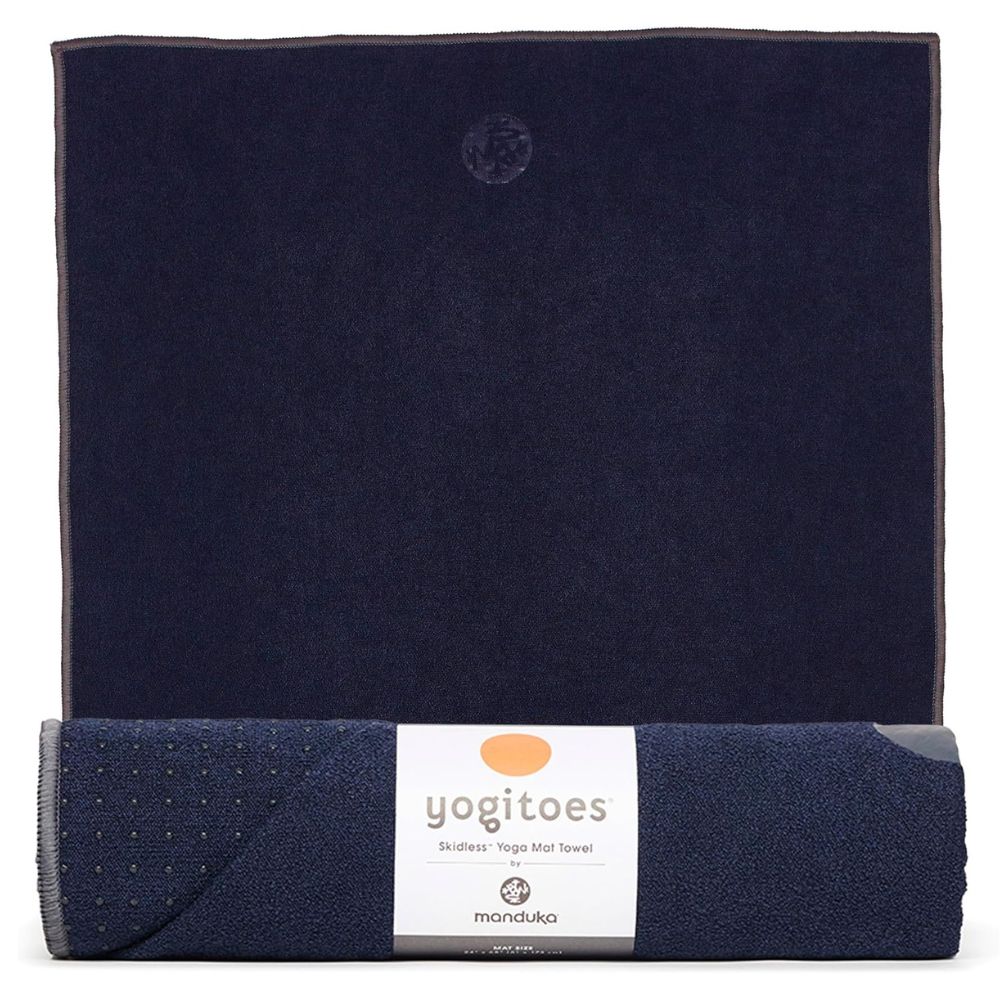
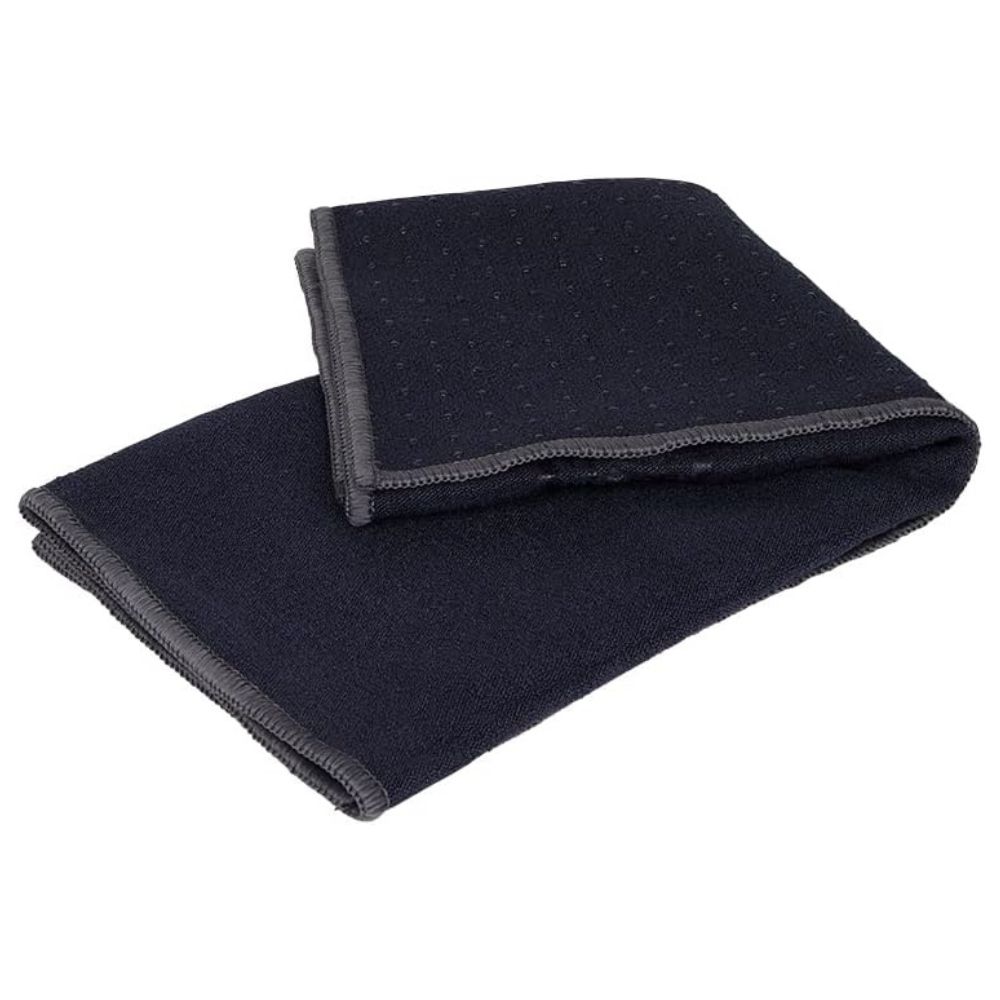
Although the Manduka Yogitoes Yoga Mat Towel is marketed especially strongly towards hot-yoga practitioners, its usefulness is not limited to heated classes. It can simply be placed dry over a mat for an ordinary home or studio practice. If you do want a little more immediate grip beneath the hands or feet, Manduka suggests lightly misting those areas with water, but this is entirely optional.
The standard version measures approximately 180 by 61 centimetres and weighs about 0.45 kilograms. Manduka currently lists the fabric as 30 per cent recycled polyester, 60 per cent polyester and 10 per cent nylon. Manduka also states that each Manduka Yogitoes Yoga Mat Towel incorporates material derived from at least four discarded plastic bottles.
I also liked that it could serve several purposes. It can be used over a yoga mat, taken to a studio, packed for travel or folded beneath the knees and hands when additional softness is helpful.
The fact that it is machine washable was another significant factor. Manduka advises washing it separately before the first use, using a cold machine wash and avoiding bleach, dryer sheets and fabric softeners, as these may affect its grip. It can then be tumble-dried on a low setting or hung to dry.
It is not the cheapest yoga mat towel available, and someone who practises only occasionally may not feel that the additional cost is justified. The silicone nubs also give it more weight than some very lightweight travel yoga mat towels.
For me, however, the combination of a secure underside, full-mat coverage, washability, absorbency and durability made it a sensible choice.
Most importantly, I did not choose it because I believed every yoga practitioner must own a premium yoga mat towel. I chose it because its design addressed the reasons I wanted a yoga mat towel in the first place.
Are There Any Disadvantages?
A yoga mat towel introduces another item to carry, wash, dry and store.
It may need adjusting during practice, especially when first used. Some yoga mat towels feel slippery when dry, while others change the sensation of standing on the mat more than expected.
A full-length yoga mat towel can also reduce the tactile feedback provided by the mat. For some balance poses, you may prefer the firmer and more direct contact of an uncovered surface.
There is also a danger of treating grip as the solution to every difficulty. Sliding can be caused by perspiration, but it can also be influenced by weight distribution, hand placement, technique, fatigue or attempting a version of a pose that is not currently appropriate.
A yoga mat towel can support your practice. It should not become a way of forcing your body to remain in a position that does not feel right.
So, Is a Yoga Mat Towel Worth Buying?
A yoga mat towel is worth considering if you regularly experience sweaty hands or feet, use shared mats, attend vigorous classes, travel with your practice or want a washable layer between yourself and your mat.
Hot-yoga practitioners are likely to find one especially valuable, but they are far from the only people who can benefit.
For a gentle home practice on a reliably grippy mat, it may remain an optional extra. A small hand towel may be all you need.
The best yoga accessories are not the ones that make your practice look more complete. They are the ones that solve a genuine problem, reduce unnecessary distraction and help you practise with greater comfort and confidence.
That is ultimately why I chose a yoga mat towel. It is not essential to yoga – but in the right circumstances, it is an extremely useful addition to the mat.

