
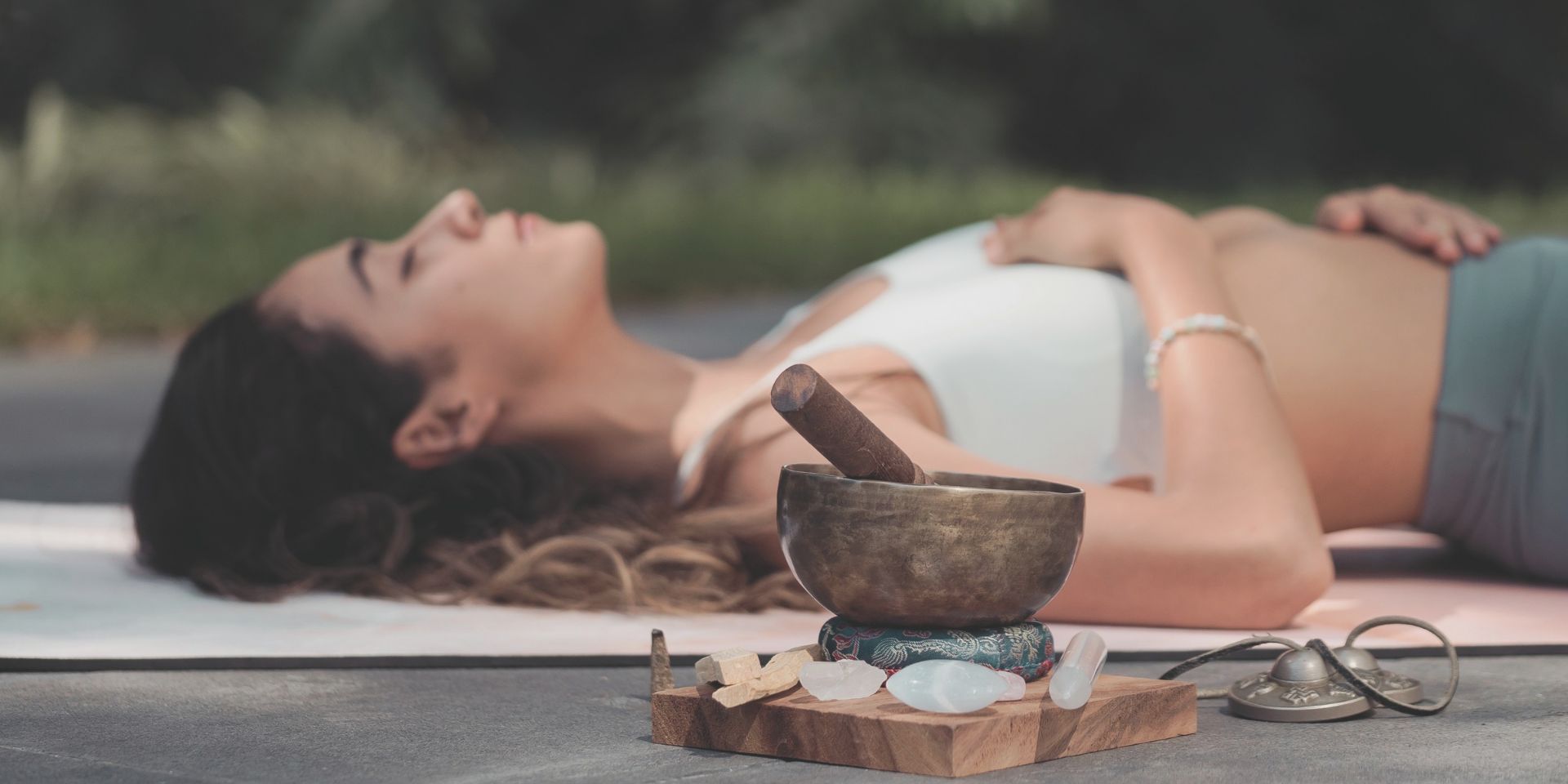
You settle yourself beneath a blanket, close your eyes and begin following the teacher’s voice. Your attention moves through your body. Your shoulders soften. Your thoughts start to lose their urgency.
The next thing you know, you are being invited to wiggle your fingers and toes.
Hang on. Where did the last twenty minutes go?
If you have ever emerged from yoga nidra wondering whether you were meditating, sleeping or somewhere in between, you are in good company. And if your first thought was, “Have I done it wrong?”, let me put your mind at rest.
Yes, it is OK to fall asleep during yoga nidra. You have not failed, and there is no need to feel embarrassed. However, falling asleep and practising yoga nidra with awareness are not exactly the same experience. Understanding that distinction can help you get more from the practice, without turning relaxation into another thing you have to get right.
Why does a practice called “yogic sleep” ask you to stay awake?
The name is understandably confusing. Yoga nidra is often translated as “yogic sleep”, yet many recordings include reminders to remain awake and listen.
In a typical guided practice, you rest in a comfortable position while a teacher leads your attention through sensations, the breath and sometimes imagery or contrasting experiences, such as heaviness and lightness. Some approaches also include a sankalpa: an intention or heartfelt resolve.
There is usually very little physical movement. The invitation is to allow deep rest while remaining gently aware of what you are experiencing.
That awareness need not feel like your usual alert, thinking, organising mind. You do not have to concentrate with the intensity of someone sitting an exam. It may be much quieter: noticing the warmth of a blanket, hearing a few words, feeling the movement of breathing.
In the introduction to Yoga Nidra Made Easy, Uma Dinsmore-Tuli and Nirlipta Tuli describe it beautifully:

Yoga nidrā is a horizontal meditation upon the threshold of sleep, a conscious way to rest.
Uma Dinsmore-Tuli and Nirlipta Tuli, Yoga Nidra Made Easy
Richard Miller, the developer of iRest, describes yoga nidra as a wider meditative path that can extend into everyday life, rather than something confined to lying on a mat. [1] This helps explain why a teacher might encourage wakefulness even when the practice feels deliciously sleepy: relaxation is part of the experience, but awareness matters too.
Why do I keep falling asleep during yoga nidra?
Sometimes the explanation is wonderfully ordinary. You are tired, you have stopped moving, the room is quiet and someone is speaking in a soothing voice.
For much of the day, activity can keep us occupied enough that we pay little attention to sleepiness. We answer messages, make decisions, care for other people and move straight into the next task. Once those demands ease, it can become much harder to overlook how sleepy we feel.
Practising late at night, lying in bed or choosing a long recording when you are already struggling to keep your eyes open can all make drifting off unsurprising.
But I would be cautious about giving every nap a deeper meaning. Falling asleep does not automatically prove that you have released stored trauma, reached a special brainwave state or finally made your nervous system feel safe. Equally, remaining awake does not mean that you have been unable to relax.
You do not need to diagnose yourself from one session. Start with the simple questions: How have I been sleeping? What time am I practising? Am I asking myself to stay awake when I am already exhausted?
Have I wasted the practice if I slept through it?
No. You have still made time to pause, and you may have experienced some of the guided practice before falling asleep or after waking. You may also appreciate the sleep itself.
What we cannot confidently say is that sleeping through the entire recording gives you exactly the same benefits as following it with awareness.
You may come across the reassuring claim that “your subconscious hears everything, so it works just the same”. It is an appealing idea, but it goes further than the research supports. The studies discussed below do not establish that sleeping through instructions is equivalent to consciously engaging with them.
There is a useful middle ground here. You can value the rest you received while recognising that you might like to explore a different experience next time.
If you wake partway through, simply join the practice where it is. You do not need to work out what you missed or mentally rewind the body scan. Listen to the next invitation. Feel the next breath.
That moment of noticing and returning is an opportunity to practise awareness in its own right.
What if I cannot remember the middle of the recording?
A gap in your memory is not a reliable way to determine precisely what happened.
You may have fallen asleep. You may have become drowsy, drifted into thoughts or moved between different levels of alertness. Not remembering every instruction does not, by itself, prove either ordinary sleep or an advanced meditative state.
Around sleep onset, experiences can become dreamlike: a fragment of an image, an unusual association or a sense that time has become less definite. This transitional period is called hypnagogia. Researchers have explored its relationship with yoga nidra, although yoga nidra should not be reduced to one single sleep stage. [2]
You do not need to analyse every moment afterwards. More useful questions might be: Was I comfortable? Did anything feel unsettling? How do I feel now? Is there one small adjustment I would like to make next time?
What does the research say about yoga nidra and sleep?
There are encouraging findings, but the science is more nuanced than some of the headlines suggest.
A 2022 study recorded brain activity during yoga nidra after participants had practised for two weeks. In the 26 recordings analysed, participants were classified as awake throughout the session using standard sleep-scoring criteria, while some brain regions showed increased slow-wave activity. The researchers described this as evidence of “local sleep”. [3]
This is interesting because it suggests that a deeply restful experience need not be identical to ordinary sleep. It does not mean that everyone who feels dreamy during yoga nidra has entered a particular brain state, or that feeling relaxed can tell us what an EEG would show.
A separate small randomised sleep-laboratory study, published in 2023, recruited 22 adults reporting insomnia. Yoga nidra reduced breathing rate compared with a quiet-rest control, but did not produce significant between-group differences in the main EEG measure, heart-rate variability or time taken to fall asleep. [4]
Other work has reported improvements in sleep after repeated practice. For example, a 2023 pilot study of yoga nidra in healthy beginners found improvements in several sleep and cognitive measures, although its before-and-after design without a separate control group limits what we can attribute to yoga nidra itself. [5]
Taken together, this is a reason to be interested, rather than a reason to promise a particular result. Crucially, these findings do not settle whether sleeping through a session provides the same benefits as staying aware.
Does 30 minutes of yoga nidra replace several hours of sleep?
You may have seen claims that a short practice is equivalent to two, three or even four hours of sleep. The research above does not establish a dependable conversion like this.
Yoga nidra may help you feel rested, and it may support your sleep routine, but it should not become a justification for regularly cutting your nights short. Enjoy it as an additional source of rest, without asking it to replace the sleep your body needs.
How to stay awake during yoga nidra without trying too hard
If your aim is to explore restful awareness, a few gentle experiments may help. Think of them as adjustments to the conditions, rather than a test of willpower.
Choose a time when you are reasonably alert. If you always practise at the point when you can barely keep your eyes open, try another time of day. A short morning session after getting up may feel quite different from a recording played in bed at midnight. There is no universally perfect time. Choose a moment that works with your life and observe what happens.
Begin with a shorter practice. Ten or fifteen minutes can be a manageable starting point. You do not need to select the longest recording to make the practice worthwhile. If you repeatedly fall asleep during a forty-minute session, a shorter one gives you a chance to explore the experience under different conditions.
Make yourself comfortable, with a little distinction from bedtime. You could practise on a padded mat, a sofa or in a supportive chair. If lying on your back is uncomfortable, adjust your position; side-lying is an option too. A cushion beneath your knees or a folded blanket under your head may make resting easier. A yoga bolster can be useful if you practise regularly, but an ordinary pillow is a perfectly sensible place to start. You are looking for comfort, not a position that keeps you awake by hurting. A separate daytime practice space, a little daylight or a seated position may be more helpful than removing every cosy thing you enjoy.
Give your attention something simple to return to. You might begin with an intention such as, “I will rest and gently follow the voice.” When you notice yourself drifting, return to the sound of the guidance or to a sensation of contact with the surface beneath you. There is no need to keep checking whether you are doing well. That can become surprisingly tiring. Richard Miller’s published practice transcript begins with an invitation to awareness and moves through bodily sensations and breathing. [6] The emphasis is on experiencing, rather than mentally memorising instructions.
Let your eyes open if that helps. You can experiment with a soft gaze instead of keeping your eyes closed. You can also change position or make a small movement when needed. Rest does not have to mean being completely motionless at all costs. If closing your eyes or focusing inward feels uncomfortable, keep some attention on the room, pause the recording or seek guidance from a teacher who can help you adapt the practice.
Give it time. Learning to rest with awareness may feel unfamiliar. Some sessions will be clear and spacious; others will be full of thoughts or sleepiness. Try changing one thing at a time. It is easier to learn what suits you when you are not simultaneously changing the time, position, teacher and length of every session.
What if I actually want yoga nidra to help me fall asleep?
Then choose a practice that supports that intention.
There is a practical difference between a daytime session that ends by inviting you to sit up and return to your activities, and a bedtime recording designed to let you drift into sleep. The iRest Institute, for example, offers practices specifically for a restful nap and for deep, restful sleep. [7]
At bedtime, you can settle into bed, select a sleep-focused recording and allow sleep to arrive if it does. Turn off autoplay so that an advert or the next video does not interrupt you. Keep the volume comfortable and choose an ending that suits your purpose.
If you would like to explore both uses, you could have a short daytime practice for awareness and a separate bedtime practice for winding down.
Neither needs to become a performance. Trying to force yourself to fall asleep can be just as frustrating as trying fiercely to stay awake. Give yourself permission to rest, without making sleep an immediate requirement.
Perhaps the harder question is whether we allow ourselves to rest
It is easy to bring our usual standards into yoga nidra. We want to do it properly, remain perfectly focused and emerge feeling transformed. Even lying down can become a project.
In an excerpt from Radiant Rest, Tracee Stanley acknowledges that simply telling people to let go does not account for their different experiences or the difficulty of relaxing. She writes:
Deep relaxation practices help us to relax systematically and to bring awareness to all the parts of ourselves that require loving attention.
Tracee Stanley, Radiant Rest
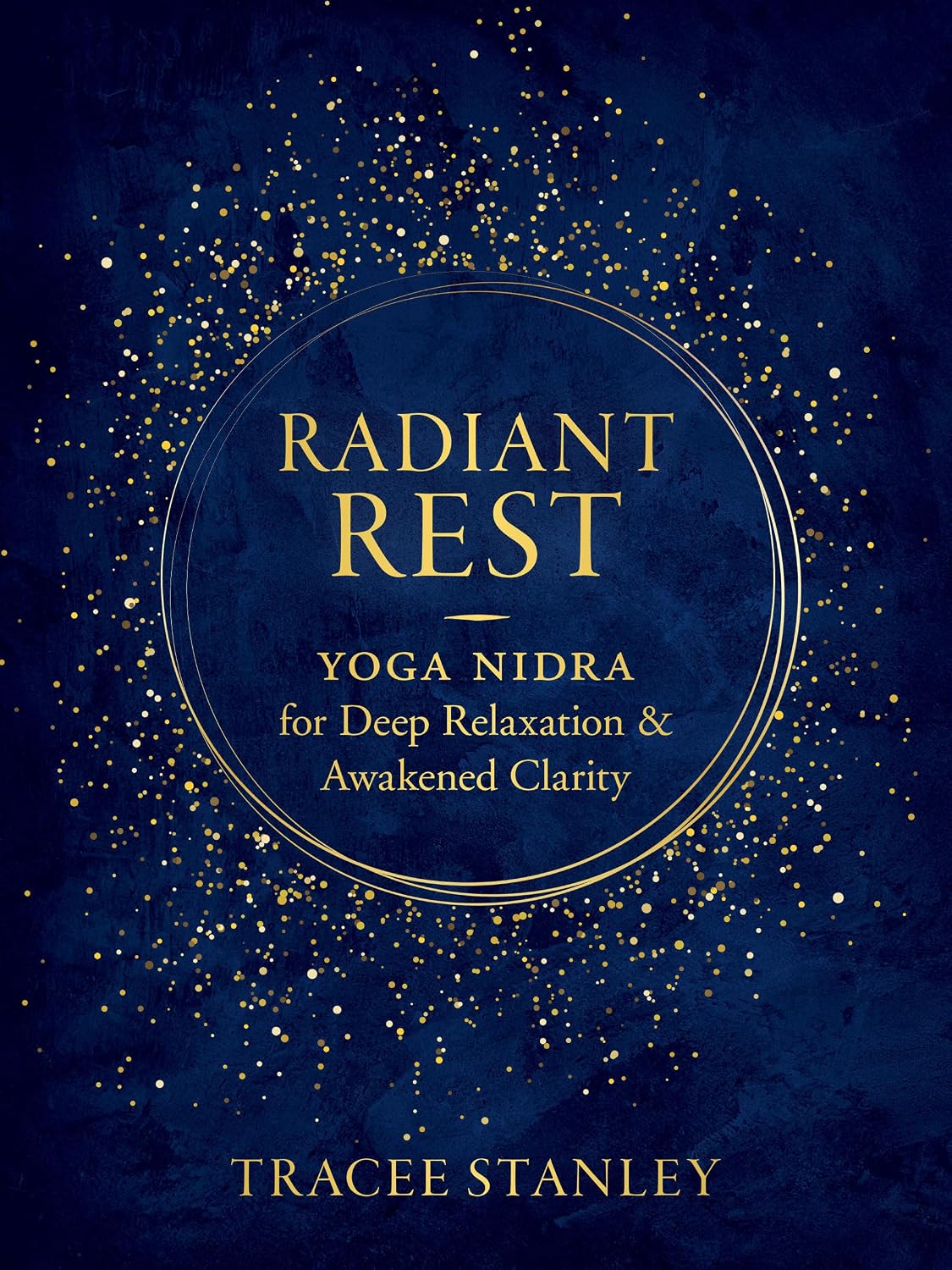
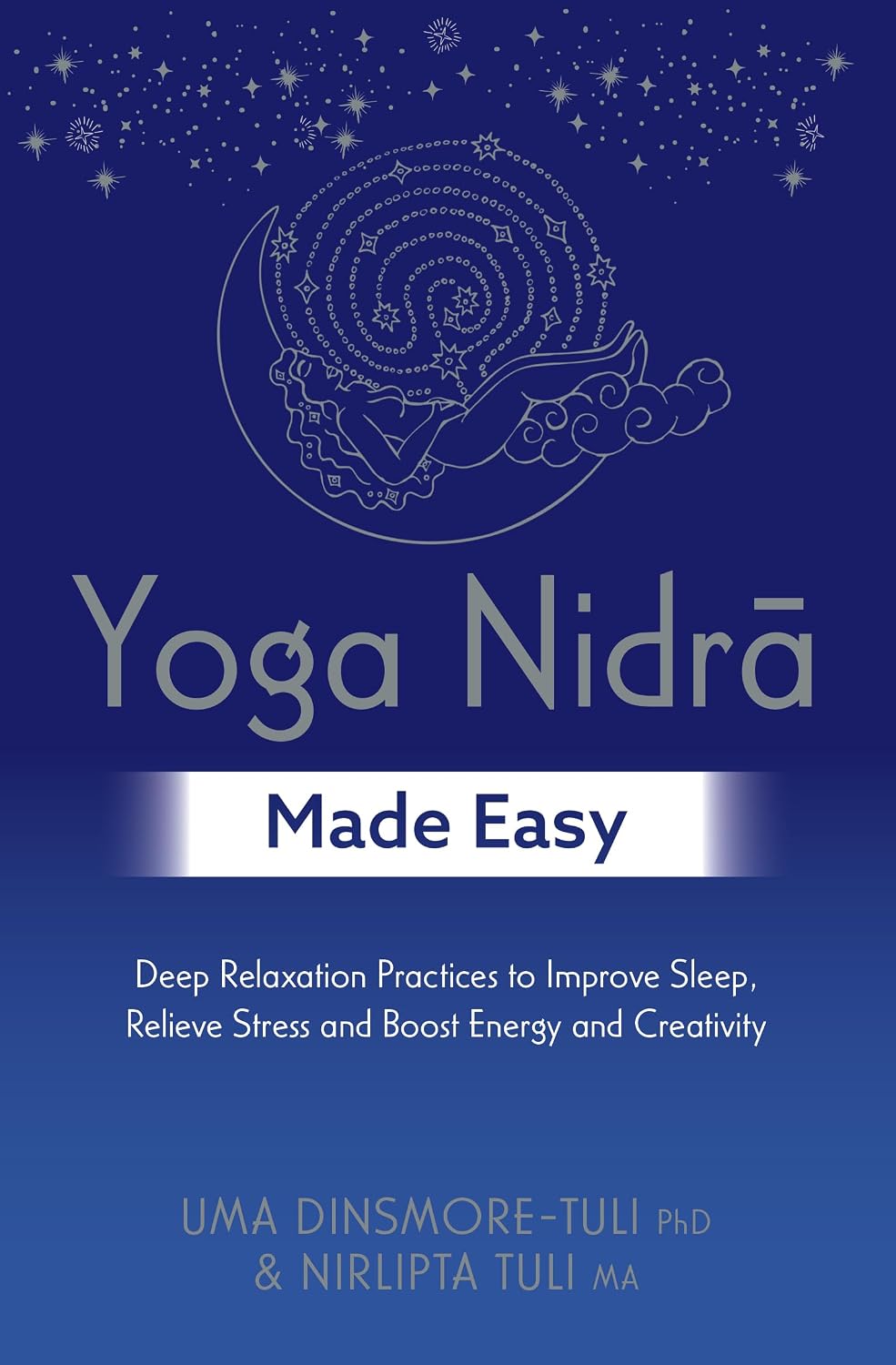
For a practical introduction to developing your own practice, Yoga Nidra Made Easy by Uma Dinsmore-Tuli and Nirlipta Tuli is another relevant option. Its opening chapters emphasise accessibility and becoming familiar with restful awareness; the authors also provide accompanying audio resources.
You have not failed at resting
If you fall asleep during yoga nidra, there is no need to apologise to your teacher or tell yourself that the session was wasted.
If your intention is to explore awareness, gently create the conditions that support it. If you are using a bedtime practice to settle towards sleep, allow that to be your purpose. And if what happens is different from what you expected, you can meet that with kindness too.
The next time you hear the invitation to move your fingers and toes and realise you have lost track of the middle, try replacing “I did it wrong” with a more useful question: What would support me best the next time I lie down to rest?
References
1. Richard Miller on Yoga Nidra as a Way of Life, Yoga International, interview.
2. Conscious entry into sleep: Yoga Nidra and accessing subtler states of consciousness (2023).
3. Datta et al., Electrophysiological Evidence of Local Sleep During Yoga Nidra Practice, Frontiers in Neurology (2022).
4. Sharpe et al., A Closer Look at Yoga Nidra – Early Randomized Sleep Lab Investigations, Journal of Psychosomatic Research (2023).
5. Datta et al., Improved sleep, cognitive processing and enhanced learning and memory task accuracy with Yoga nidra practice in novices, PLOS ONE (2023).
6. Richard Miller, Complete Yoga Nidra Practice, publisher-hosted companion transcript, Sounds True.
7. iRest Institute, Try iRest Now, including sleep-oriented recordings.